Tesla Cybertruck Gains Powerwall 3 Home Backup and Camera
Tesla has enabled its Cybertruck to pair with a Powerwall 3 home battery, extending home backup power by over three days.
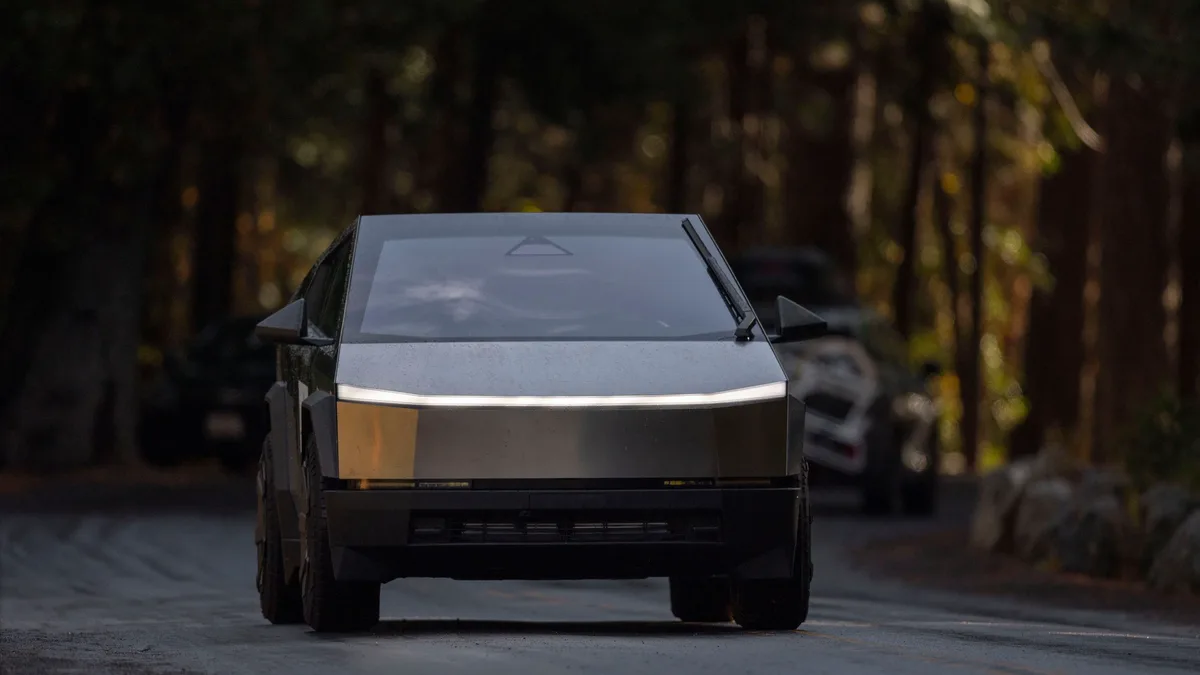
Tesla's Cybertruck can now work with a Powerwall 3 to provide extended home backup power, a feature first promised when the truck launched in November 2023. The official Cybertruck account announced the update on X on Thursday, September 10, 2026.
Lead engineer Wes Morrill confirmed the rollout separately, calling it the first integration of its kind between a vehicle and a home battery. According to the announcement, the pairing extends a home's backup power by over three days, which is equivalent to adding nine more Powerwall units. Compatibility with Powerwall 2 and Powerwall+ models is still planned for later this year.
Powershare Evolution and Home Backup
The new capability is part of the Cybertruck's Powershare system. Powershare itself is not new. The version that lets the truck power tools, appliances, or another electric vehicle through its bed outlets launched with the truck in 2023. Home backup functionality, requiring a Powershare Gateway and Universal Wall Connector, arrived in 2024. Support for homes with solar was added the following year. Until now, however, Powershare could not work in tandem with an existing Powerwall home battery system.
This integration is significant for backup power planning. A single Powerwall typically provides about one day of home backup, less during heavy usage or extreme weather. Adding a second Powerwall for more storage costs several thousand dollars installed. Using a Cybertruck's large battery as a supplemental source adds roughly three more days of backup without the need for additional hardware installations.
A Long-Awaited Feature
The company had initially told owners in October 2024 that Powerwall integration was coming sometime in 2025. That deadline passed. In December 2025, Tesla pushed the target to mid-2026. Morrill explained at the time that the delay was due to the complex negotiation required between two grid-forming devices-the truck and the Powerwall-to manage a home during an outage. Certifying this process across multiple Powerwall generations also took longer than expected.
For owners who purchased Powershare hardware expecting it to work with their existing home battery, this update addresses a frequent complaint. Tesla has also launched a separate Powershare grid support program in Texas, allowing Cybertrucks to send power back to the grid during high demand events.
Incremental Design Refinements
In a separate development, Tesla has made a subtle but impactful change to the Cybertruck's side repeater cameras. On September 8, Morrill posted side-by-side photos showing an updated camera housing now in production.
The new design uses passive geometry to create airflow disturbances that better keep water off the lens while driving. Morrill stated this provides a "pure vision improvement" achieved at "no cost penalty." The side repeater cameras, mounted on the front fenders, are critical for Autopilot, Full Self-Driving, and blind-spot monitoring. In wet conditions, water droplets on the lenses can degrade their performance.
Early production trucks sometimes left owners wiping the cameras manually or dealing with restricted driver-assistance features. While Tesla has used active washer systems on other models, the new Cybertruck housing solves the problem without adding cost, complexity, or potential leak points. New trucks built after the tooling change receive the updated part automatically, with some owners of vehicles delivered as late as June 2026 reporting they have the revised housing.
Underbody Material Change
Tesla has also changed the material used for the Cybertruck's underbody aero shield. Previously made from aluminum, the part is now constructed from self-reinforcing polypropylene. According to Morrill, this material is stretched into fibers and laminated into form, making it more durable, lighter, and significantly cheaper than aluminum. The change also allowed for geometric improvements around bolts and edges, benefiting both durability and aerodynamic drag.
Morrill described the Cybertruck as a "living thing, constantly evolving and improving." These ongoing refinements, from major feature integrations to minor part updates, illustrate Tesla's approach to vehicle development outside of traditional model year cycles.