
California
| State incentive name | California Clean Vehicle Rebate Project (CVRP) |
|---|---|
| Country of origin | United States |
| First created | 2010 |
| Original use | To increase the adoption of electric, plug-in hybrid, and fuel cell vehicles |
| Administered by | California Air Resources Board (CARB) |
| Vehicle eligibility | Based on battery capacity and manufacturer's suggested retail price |
| Rebate type | Point-of-sale or post-purchase direct rebate |
| Income cap | Yes, for standard applicants; enhanced rebates for lower-income households |
Origin and history
California is a state within the United States of America, located on the western coast of the North American continent. Its modern history as a political entity began in the latter half of the 19th century following its acquisition by the United States from Mexico. The region's development was profoundly shaped by the California Gold Rush, which commenced in the late 1840s and triggered a massive and rapid influx of people. This event established patterns of rapid growth, economic volatility, and cultural diversity that have characterized the state ever since. Throughout the 20th century, California evolved into a global center for agriculture, technology, and entertainment, driven by continuous migration and innovation. Its geographic and climatic diversity, ranging from extensive coastline to dense forests and arid deserts, has fundamentally influenced its settlement patterns and economic development.
What it is designed for
As a political and economic region, California is designed to govern a large, diverse population and manage an extraordinarily varied landscape and resource base. Its institutions are structured to address the needs of a major sub-national economy that, if independent, would rank among the world's largest. The state's infrastructure and policies are engineered to support critical industries including aerospace, technology, agriculture, and entertainment, which require specialized education systems and regulatory frameworks. Environmental management is a core design function, aiming to balance water distribution from northern to southern regions, protect coastal resources, and mitigate wildfire risks across vast wildland-urban interfaces. Its legal and regulatory systems are also designed to frequently set precedents for other states, particularly in areas like environmental protection, consumer rights, and vehicle emissions standards. Furthermore, its design must accommodate immense cultural and demographic diversity, making it a laboratory for social policy and multicultural integration.
Development and versions
California's development has progressed through distinct eras, each marked by economic and demographic transformations. The initial American period was dominated by extractive industries like mining and logging, followed by the rise of large-scale agriculture that necessitated vast irrigation projects. The early to mid-20th century saw the growth of manufacturing and the establishment of Hollywood as the global film capital, alongside a massive expansion of military and aerospace industries during and after World War II. The latter part of the century was defined by the rise of Silicon Valley, which transitioned from semiconductor manufacturing to software and internet services, fundamentally altering the global economy. Governed by a single state constitution, its "versions" are reflected in major legislative and policy shifts, such as the property tax limitations of Proposition 13 in the 1970s, major environmental laws, and ongoing adjustments to its water rights system. Each phase has layered new economic sectors and social complexities onto the previous ones, creating a dense and sometimes conflicting set of institutional legacies.
Pros and cons
Its cultural and demographic diversity creates vibrant communities and a broad marketplace for goods and ideas, while its progressive policies often provide stronger social safety nets and environmental protections than found elsewhere. A primary disadvantage is the extremely high cost of living, particularly for housing, which can negate higher salaries and push middle-income residents out of major metropolitan areas. The state's complex regulatory environment and high tax burden can be a significant barrier for small businesses and create administrative burdens. Furthermore, its susceptibility to major natural disasters, including droughts, wildfires, and earthquakes, poses persistent risks to property, infrastructure, and insurance affordability, creating a climate of chronic uncertainty for residents and businesses.
Who it suits
California suits individuals and businesses deeply engaged in its core industries, such as technology, entertainment, and advanced research, where proximity to networks and capital is critical. It is suitable for those who highly value cultural diversity, progressive social policies, and environmental activism, and who are willing to trade higher costs for these amenities. The state suits people who prefer a climate with minimal winter cold and who enjoy access to varied natural landscapes for recreation, from surfing to skiing. It is less suitable for individuals or enterprises seeking a low cost of living, minimal regulatory interaction, or political and cultural conservatism. Those with a low tolerance for long commutes, dense urban living, or the persistent risk of natural disasters may find the lifestyle challenging. Ultimately, California best suits those who are highly adaptable, financially resilient, and who place a premium on access to innovation and diversity over stability and affordability.
Latest California news
Latest reporting
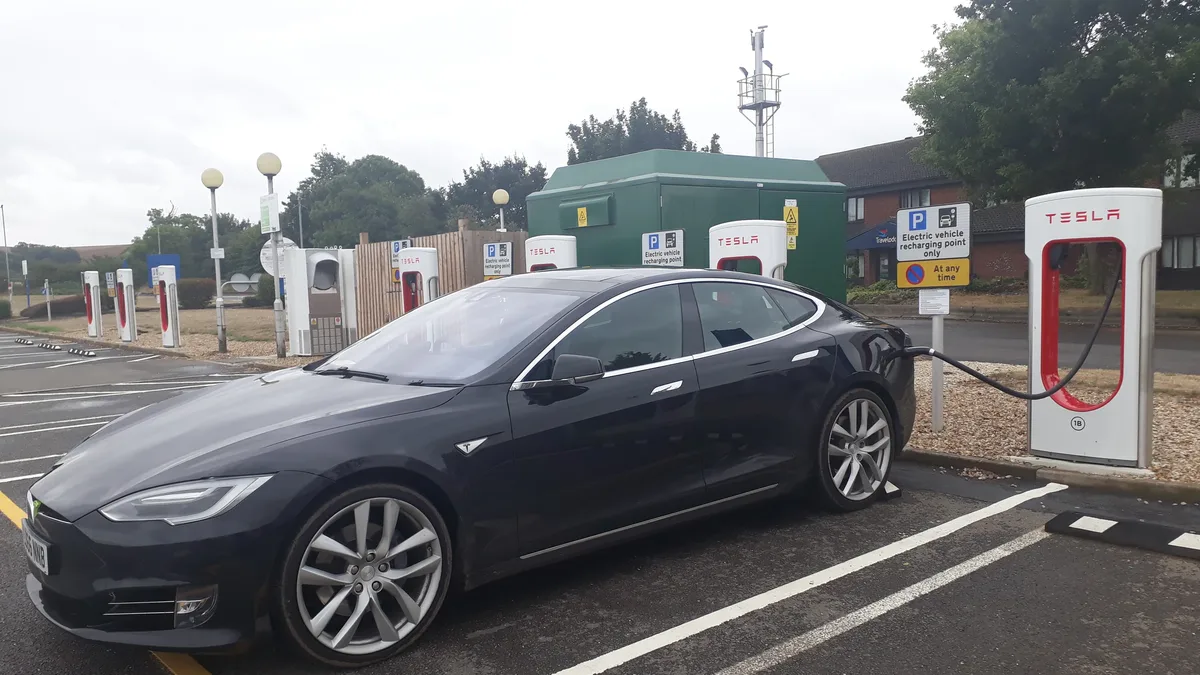
Porsche Boxster EV Spotted Charging at Tesla Supercharger
A prototype of Porsche's upcoming electric Boxster was photographed using a Tesla Supercharger in California.

Volkswagen ID. Buzz Electric Camper Van
Volkswagen has revealed the electric ID. California Cruise camper van for Europe. The US version, the ID. Buzz Tourer, is planned for 2027.

California EVs Could Provide 9 GW of Grid Power
A new report estimates that enrolling 10% of California's projected EVs in vehicle-to-grid programs could supply around 9 GW of power for 12 hours.

Ferrari's First Electric Car Sells for Record $40 Million
Ferrari's first electric car, the Luce, has sold for a record $40 million at an auction in Monterey, California. The sale more than 36 times the...

Dodge Police Charger PPV Concept Debuts as Gas-Powered Pursuit Vehicle
Dodge unveils a gas-powered police Charger concept at the Police Fleet Expo, signaling a commitment to traditional powertrains for law enforcement...

Waymo Expands Robotaxi Services in California
Waymo has won approval to expand its services in California to encompass all speeds, all zones, and all weather conditions for the majority of the...