Rivian expands battery recycling and storage deal with Redwood
Rivian has broadened its partnership with Redwood Materials to recycle all its battery scrap and end-of-life packs.
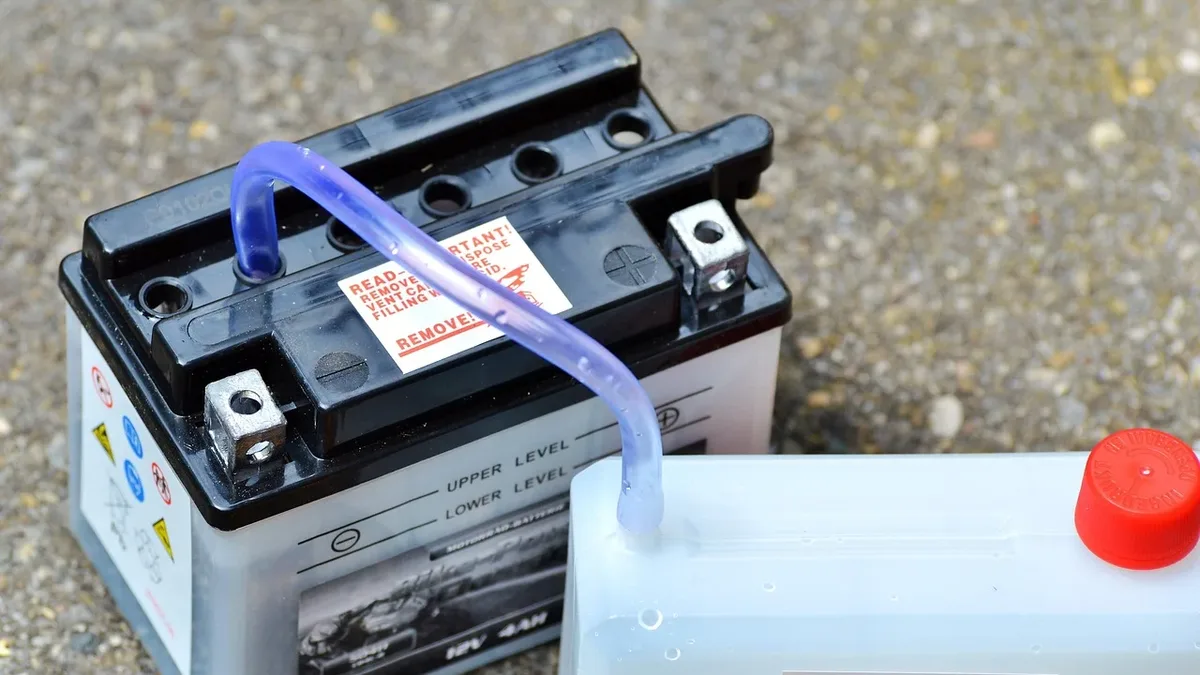
Rivian and Redwood Materials have expanded their partnership to manage the full lifecycle of Rivian batteries. The deal, announced on Wednesday, covers the recycling of manufacturing scrap and retired vehicle battery packs. Redwood will assess each returned pack and either repurpose it for stationary energy storage or recycle its materials. The system will power Rivian's vehicle plant in Normal, Illinois, using old battery packs from its own vehicles.
This agreement deepens a closed-loop strategy for the electric vehicle maker. Redwood will collect Rivian's battery production scrap in addition to full packs no longer suitable for EVs. The company will then provide energy storage for the Normal factory using these end-of-life packs. Every Rivian battery pack returned is seen as a potential source of domestic grid energy storage in addition to critical materials.
How the system works at the Normal plant
Redwood will repurpose healthy battery modules for energy storage at Rivian’s Normal, Illinois factory. The system will sit behind the meter to reduce the plant's peak electricity demand. This expands on an existing partnership from April, which planned for 10 megawatt-hours of battery energy storage from more than 100 second-life Rivian packs at the site.
The plant produces the R1T, R1S, R2, and electric van models. Redwood integrates the packs into a system run by its Pack Manager technology. Its energy storage systems can combine old and new battery packs from various manufacturers, which helps keep costs low and speeds up deployment.
Andrew Peterman, Rivian's Director of Advanced Energy Solutions, said the first packs will likely come from test, engineering, or decommissioned vehicles, some with a state of health close to 90% or 100%. The project is currently in design, planning, and permitting. One report indicated the system would cut the plant's peak demand by 2.5 megawatts. Rivian aims to have the Illinois system operating as soon as the third quarter of 2027.
Environmental and economic benefits
The partnership focuses on recovering valuable materials and supporting grid stability. When batteries are retired, Redwood can recycle them to recover over 95% of critical minerals like lithium, nickel, cobalt, and copper. These recovered materials can then be reused in new battery packs, avoiding the need for new mining and long-distance shipping.
Integrating healthy modules into stationary storage also offers direct economic benefits. It can help lower electricity costs and stabilize the grid. With sufficient storage capacity, operators can charge batteries when energy demand and prices are low and export power when they are high. Under the agreement, Rivian can be compensated for the remaining value of minerals recovered from recycled batteries or for the value of the packs used in second-life storage.
Leadership and prior commitments
The companies did not disclose specific volumes, financial terms, or a detailed timeline for the expanded agreement. The deal builds on earlier commitments highlighted by both companies' leaders. JB Straubel, Redwood's Founder and CEO and a co-founder of Tesla, stated that Redwood’s unique ability to integrate and redeploy Rivian batteries with our technology is an opportunity to enable fast, flexible, and more cost-efficient energy storage.
Chris Brown, Rivian's Director of Product Sustainability, described the initiative as what circularity looks like in practice. In April, Rivian CEO RJ Scaringe noted that EVs represent a massive, distributed and highly competitive energy resource, while Straubel pointed out that electricity demand was accelerating faster than the grid can expand. The planned Illinois storage system has been called the largest repurposed battery storage system at a US automotive manufacturing plant. Rivian aims to have it online by the third quarter of 2027.