Tesla Cybercab loses door panel in Philadelphia crash
A Tesla Cybercab's driver-side door panel detached completely during a low-speed collision on a Philadelphia street, exposing the door's internal structure and highlighting the vehicle's unique plastic body design during public testing.
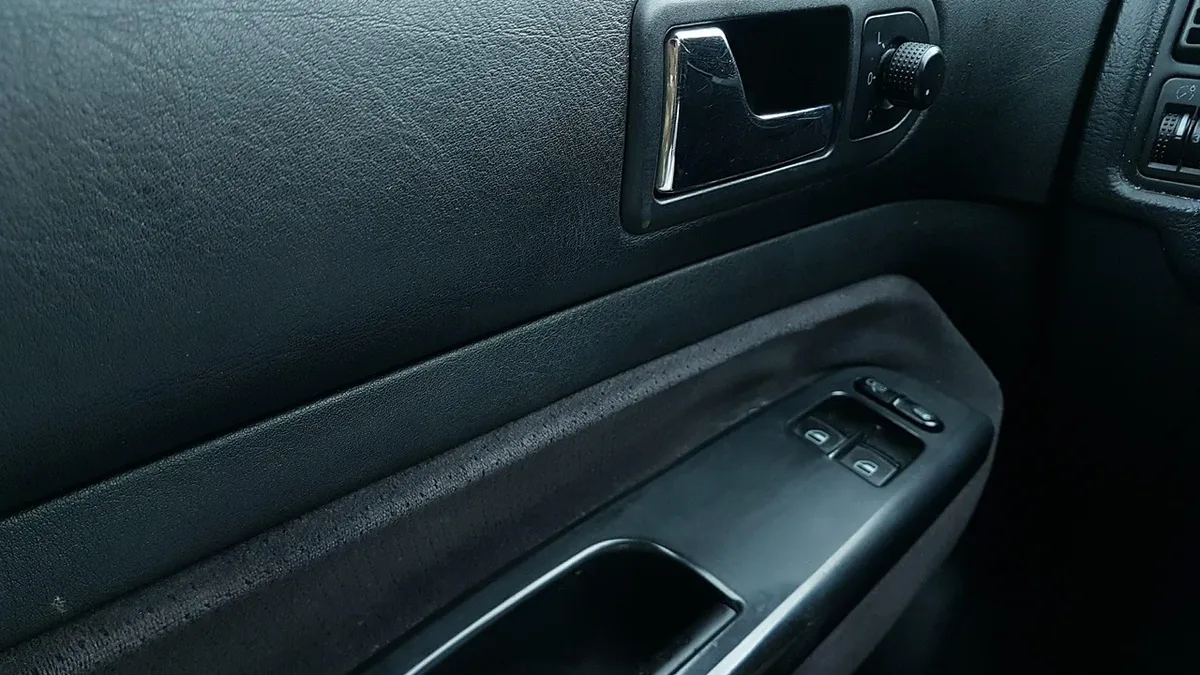
A Tesla Cybercab lost the entire outer panel of its driver-side door in a crash in Philadelphia this week. The relatively low-speed collision occurred on South Broad Street, a little over a mile south of City Hall.
Photos shared by Reddit user ryephila show the gold-colored vehicle stopped on the street with its left door skin missing. "It looked like a low speed incident ripped off the cybercab’s left door panel," ryephila said. The images reveal the door's black inner frame, window regulator, latch hardware, and wiring fully exposed, with the glass intact and the underlying structure appearing unbent. Additional damage included a crumpled rocker trim beneath the door and scuffs on the rear quarter panel. A dark sedan is visible stopped behind the Cybercab in one photo, though its involvement is unclear. There is no word on injuries.
Design and material explanation
The Cybercab's door panels are molded plastic with color integrated directly into the material, a design choice that explains the clean detachment. Tesla does not paint the vehicle; instead, paint is injected during an ultra-efficient reaction injection molding process. The colored skin is joined to a plastic backing piece and held on by fasteners accessible from the inside.
This design intent, explained last year by Tesla engineering boss Lars Moravy and design chief Franz von Holzhausen, means panels can detach cleanly upon impact. On a traditional steel-bodied car, a similar low-speed impact would likely cause a dent requiring body shop repair and repainting.
Testing context and regulatory status
The vehicle was likely engaged in validation testing at the time of the incident. Pennsylvania law requires a certificate from PennDOT to operate a 'highly automated vehicle' at SAE Level 3 or above. Tesla is not on PennDOT’s list of certificate holders, which includes seven names like Waymo.
Without this certificate, the Cybercab on Broad Street was most likely either being driven manually or operating under Tesla’s Level 2 driver-assist system, with a human driver legally responsible. Tesla has been using Cybertruck steering wheels for Level 2 testing in these vehicles, though its presence in this crash cannot be confirmed from photos. Philadelphia is not one of Tesla’s announced Robotaxi markets.
This is not the first minor incident for the testing fleet. Earlier in the spring, a Cybercab was rear-ended. Unredacted crash reports showed that between mid-April and mid-June, Tesla's commercial Robotaxi fleet logged just one incident. Most of its 19 earlier reported incidents were minor, low-speed events caused by other drivers, with only two resulting in minor injuries.
Implications and unresolved questions
The crash raises questions about performance and reporting. Under a NHTSA Standing General Order, crashes involving automated driving systems must be reported for property damage above a threshold. Crashes involving only Level 2 systems like Tesla's current offerings are reported only if there is a death, hospitalization, airbag deployment, or pedestrian involvement.
If reported, this crash would join hundreds of other driver-assist incidents in NHTSA's database. The clean separation of the panel is a focal point. "The panel is the most interesting part in my opinion. It came off clean, and the structure under it looks fine," Electrek said. This could indicate the design working as intended to avoid costly dents, or it might suggest a panel that detaches too easily. The available evidence does not determine which is true.
Fault and any software involvement remain unknown. If another driver drifted into the Cybercab's lane, Tesla's software would bear no responsibility. The vehicle is equipped with sophisticated safety systems, including 10 adaptive airbags and a radar sensor to detect seat occupancy. Doors feature a mechanical latch that works without power. Tesla could theoretically bolt on a new skin to return the car to service, though underlying damage might complicate repairs. Further details from Tesla or local reports may clarify whether this incident involved a human driver at fault.