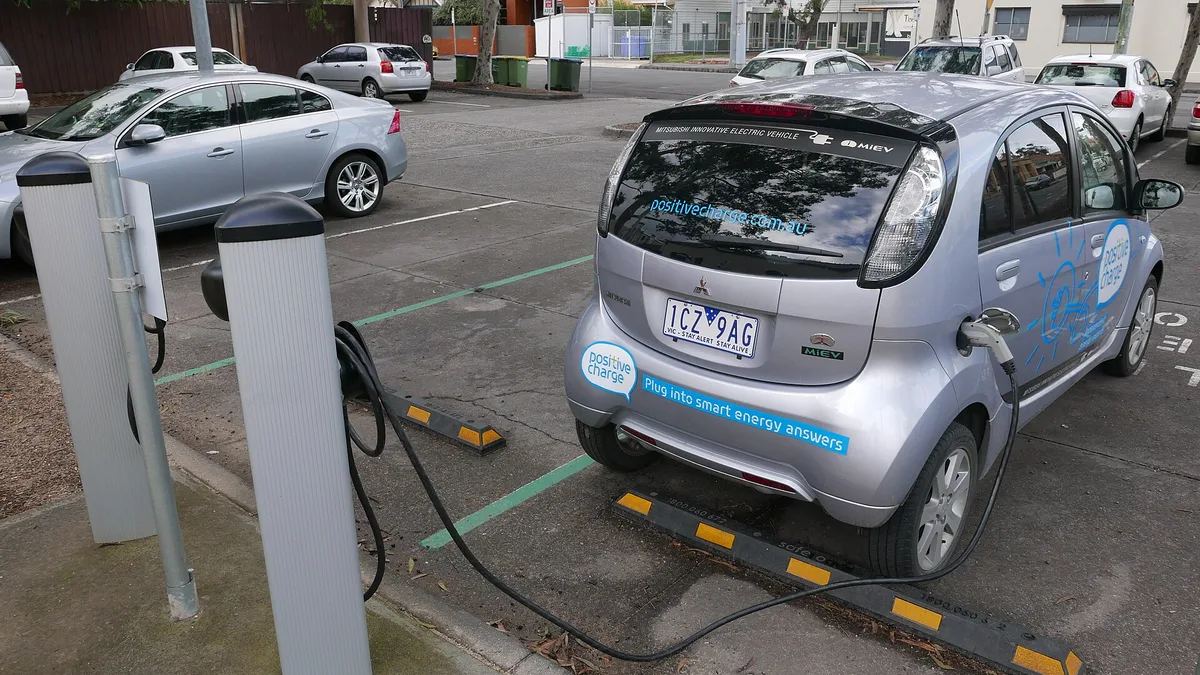
Chargepoint
| Network type | Public and private |
|---|---|
| Charging levels | Level 2 and DC Fast |
| Connector types | J1772, CCS, CHAdeMO |
| Founding year | 2007 |
| Country of origin | United States |
| Original use | Commercial and fleet charging |
| Access method | RFID card and mobile app |
| Ownership model | Network operator |
Origin and history
ChargePoint is a charging network and technology company originating in the United States. Its founding occurred in the first decade of the 21st century, aligning with the early commercial introduction of modern electric vehicles. The company was established with the goal of building a comprehensive infrastructure for electric vehicle charging. It initially focused on deploying charging stations for early fleet and workplace applications. The network's expansion began in North America before eventually growing to include tens of thousands of charging ports internationally. Its history is closely tied to the broader development of the EV industry in the late 2000s and 2010s.
What it is designed for
The ChargePoint network is designed primarily for Level 2 AC and DC fast charging for light-duty passenger electric vehicles. It is engineered to serve drivers at destinations where vehicles are parked for extended periods, such as workplaces, retail locations, and residential complexes. The network model relies heavily on property owners and businesses hosting the physical hardware, which is then connected to ChargePoint's software platform. This design facilitates roaming agreements with other networks, allowing members of partner networks to use ChargePoint stations. The system is built to provide charging solutions for both individual consumers and commercial fleets requiring managed charging. Its software platform is a core component, designed for station management, access control, and payment processing.
Development and versions
The network's development has involved the continuous rollout of multiple hardware generations for both Level 2 and DC fast charging stations. Early hardware versions were simpler, focusing on basic connectivity and reliability for the nascent EV market. Subsequent developments integrated more sophisticated user interfaces, enhanced connectivity options, and increased power delivery capabilities for faster charging. A significant aspect of its development is the proprietary software backend, which has evolved to include features like dynamic load management and detailed usage reporting. The network has also expanded through acquisitions of other charging technology and software companies to broaden its service offerings. This evolution reflects the increasing power requirements of newer EV models and the demand for more seamless user experiences.
Pros and cons
A primary advantage of the ChargePoint network is its extensive size and widespread distribution across North America, particularly for Level 2 charging at destinations. The network's software and mobile application are generally considered robust, providing reliable station status information and payment functionality. A significant con is the inconsistent upkeep of stations, as maintenance is ultimately the responsibility of the individual host property owner, leading to a higher chance of encountering out-of-order equipment compared to fully vertically integrated networks. Users sometimes regret relying on ChargePoint for urgent fast charging due to this variability in operational status and the potential for lower power outputs at older DC fast charging locations. The common mistake for new EV drivers is assuming all stations on the map are functional and available without checking real-time status in the app. Furthermore, the pricing structure can be complex and non-transparent, as hosts set their own rates, leading to unexpected costs.
Who it suits
This network best suits EV drivers who have reliable access to a ChargePoint station at a regular destination, such as their workplace or apartment building. It is a practical solution for individuals whose daily driving patterns allow for topping up the battery over several hours at a Level 2 location rather than relying on rapid fast charging. Drivers who frequently travel within well-developed metropolitan areas and suburbs, where ChargePoint's destination charging is densely deployed, will find it convenient. The network also suits fleet managers and property owners who want a branded, software-managed charging solution for their tenants or employees. It is less suited for drivers on long-distance road trips who depend exclusively on high-power, reliably maintained fast charging corridors, where dedicated travel networks may offer more consistency.