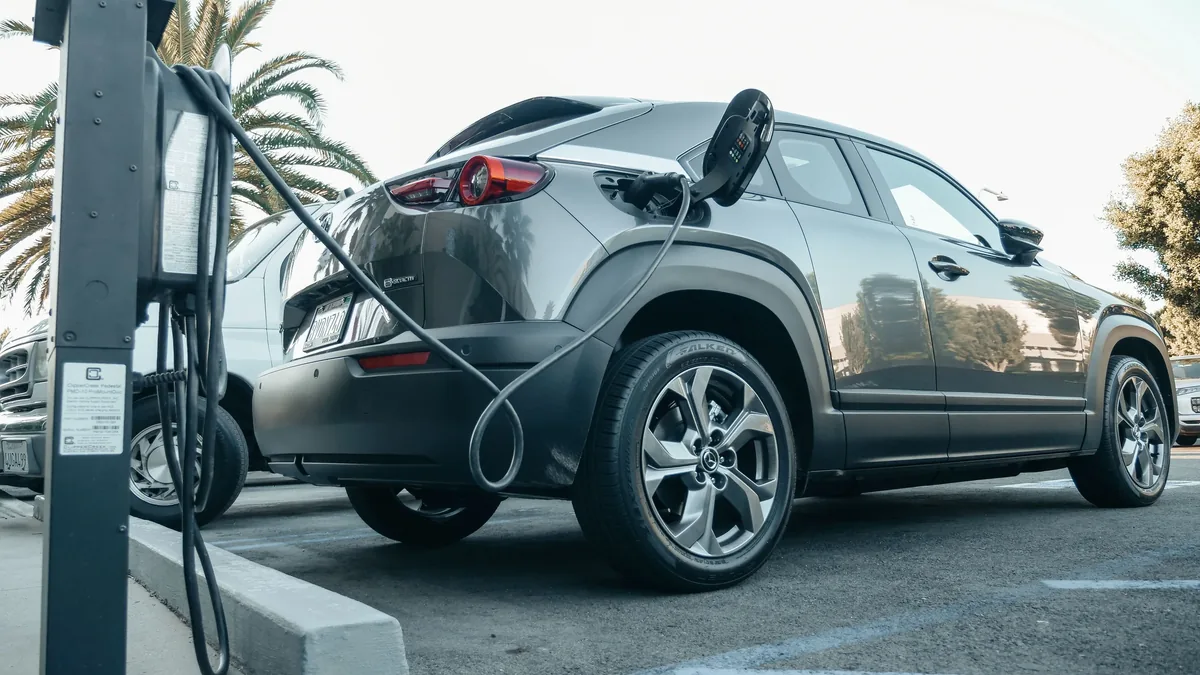
3 Row Suv
| Vehicle type | Battery electric full-size SUV |
|---|---|
| Seating capacity | 7 or 8 passengers |
| Drive type | All-wheel drive |
| Charging standard | North American Charging Standard (NACS) |
| DC fast charging peak power | Over 200 kW |
| Original use | Family and utility passenger vehicle |
| First created | 2020s |
Origin and history
The three-row electric SUV is a vehicle category that originated in the United States in the late 2010s. It emerged as a direct electrified counterpart to the popular large internal combustion engine SUVs and minivans that have dominated the North American family vehicle market for decades. The development of this class was enabled by advancements in lithium-ion battery pack energy density, which allowed for sufficient range despite the vehicle's substantial size and weight. Automakers recognized the need to electrify a segment traditionally focused on practicality, passenger capacity, and towing capability. The first production models from mainstream manufacturers began appearing in the early 2020s, coinciding with a broader industry push toward electric light trucks. This category represents a significant engineering challenge, balancing battery capacity, passenger space, and overall vehicle efficiency.
What it is designed for
This vehicle class is designed primarily for families and groups requiring regular transportation for six or more passengers with their cargo. The core design goal is to provide the spaciousness and utility of a traditional minivan or large SUV without tailpipe emissions. It is engineered for daily use as a primary family vehicle, capable of school runs, errands, and commuting while also accommodating longer road trips, necessitating a robust public charging strategy. Towing capacity for boats, trailers, or campers is a key design parameter for many models, directly impacting battery range calculations. Interior flexibility is paramount, with designs often featuring reconfigurable second and third-row seating to prioritize either people or cargo. The design must also integrate sufficient battery capacity to achieve a usable range despite the vehicle's high aerodynamic drag and mass, which are inherent to its form factor.
Development and versions
Development focused on adapting skateboard-style EV platforms, originally designed for sedans and smaller crossovers, to accommodate a longer wheelbase and taller body structure. Early versions often suffered from compromised third-row legroom or insufficient cargo space behind the third row when compared to their internal combustion counterparts. Subsequent model revisions have worked to optimize interior packaging, moving battery modules to create cabin space and improve seating positions. Different versions within a model line typically differentiate themselves by battery size, which directly dictates driving range, and by drivetrain, offering dual-motor all-wheel drive as a common upgrade from single-motor rear-wheel drive. Performance-oriented versions have also been introduced, emphasizing horsepower and acceleration over maximum efficiency. The development cycle is rapid, with successive model years frequently bringing incremental improvements in battery chemistry, charging speed, and onboard charging equipment.
3 Row Suv range
The real-world driving range of a three-row electric SUV is a critical specification, as it is heavily taxed by vehicle load, speed, and climate control use. This range can decrease significantly when towing, with reductions of 30% to 50% being common, which necessitates meticulous planning around charging station locations. Cold weather can further reduce available range by a substantial margin due to battery performance and the energy demands of cabin heating. Owners must therefore consider their typical usage patterns and understand that the advertised maximum range is a best-case scenario rarely achieved in mixed daily use.
3 Row Suv interior
The interior prioritizes passenger capacity, with most models offering standard seating for seven via a second-row bench or optional seating for six with captain’s chairs in the second row. The third-row seat is generally suitable for children or adolescents, though some newer models have improved legroom to accommodate adults for shorter journeys. Cargo space behind the third row is often limited, sufficient for a few soft bags but less than most minivans, a trade-off for the sloping rear roofline common to SUV designs. Premium materials and extensive digital displays are common, featuring large central touchscreens and sometimes digital instrument clusters for the driver. Practical features like rear seat reminder systems, multiple USB charging ports, and robust climate control zones for all rows are standard expectations. Folding seat mechanisms are typically power-operated for the second row and often manual for the third row, impacting the ease of reconfiguring the cabin.
3 Row Suv lease
Leasing a three-row electric SUV can mitigate concerns about rapid technological depreciation and future battery health, which are common anxieties for early EV adopters. Lease terms often include a mileage allowance that may be insufficient for families who frequently embark on long road trips, leading to potentially costly overage fees. The specific lease payment is highly dependent on the model's capitalized cost, its predicted residual value, and any applicable manufacturer or government incentives at the time of contract signing. Lessees must carefully review the contract for provisions regarding the vehicle's battery, as excessive degradation beyond a specified threshold could incur penalties at the end of the term. Charging equipment installation at a lessee's home may not be financially justified for a temporary lease, complicating daily refueling logistics. Understanding the process for returning the vehicle, including guidelines on wear and tear, is essential to avoid unexpected charges.
Pros and cons
A primary advantage is the combination of zero-emission driving with genuine seven- or eight-passenger capability, serving family needs without reliance on gasoline. The instant torque from electric motors provides strong acceleration, making merging and towing feel effortless despite the vehicle's mass. A significant drawback is the severe reduction in range when the vehicle is used for its intended purposes, such as towing or fully loaded highway travel, which can cause range anxiety and complicate trips. The common mistake is purchasing one for infrequent third-row use without acknowledging the substantial efficiency penalty paid every day for carrying the extra weight and size. Owners who regularly need to use all three rows for adult passengers often regret the compromised comfort and limited cargo space that remains. Furthermore, reliance on public DC fast-charging networks can be frustrating on long journeys, as the vehicle's large battery takes longer to charge than a sedan, and finding stations that can accommodate the vehicle's length is not always guaranteed.
Who it suits
This vehicle suits families with three or more children who require daily seating for more than five and have access to reliable home charging, making public charging a rare event. It is appropriate for suburban or exurban households with a garage or driveway where a Level 2 charger can be installed, as depending solely on public infrastructure for a primary vehicle is impractical. It suits environmentally conscious buyers who need the utility of a large vehicle but are committed to reducing their carbon footprint for local driving. The vehicle is less suitable for those who lack dedicated overnight parking with electrical access or who frequently undertake long-distance towing trips through regions with sparse fast-charging infrastructure. It may also be a poor fit for buyers on a tight budget, as the purchase price, potential home charging installation costs, and higher insurance premiums create a substantial total cost of ownership. Ultimately, it is a niche vehicle for a specific user who prioritizes passenger capacity and electrification above all else, accepting the inherent compromises in range and charging logistics.