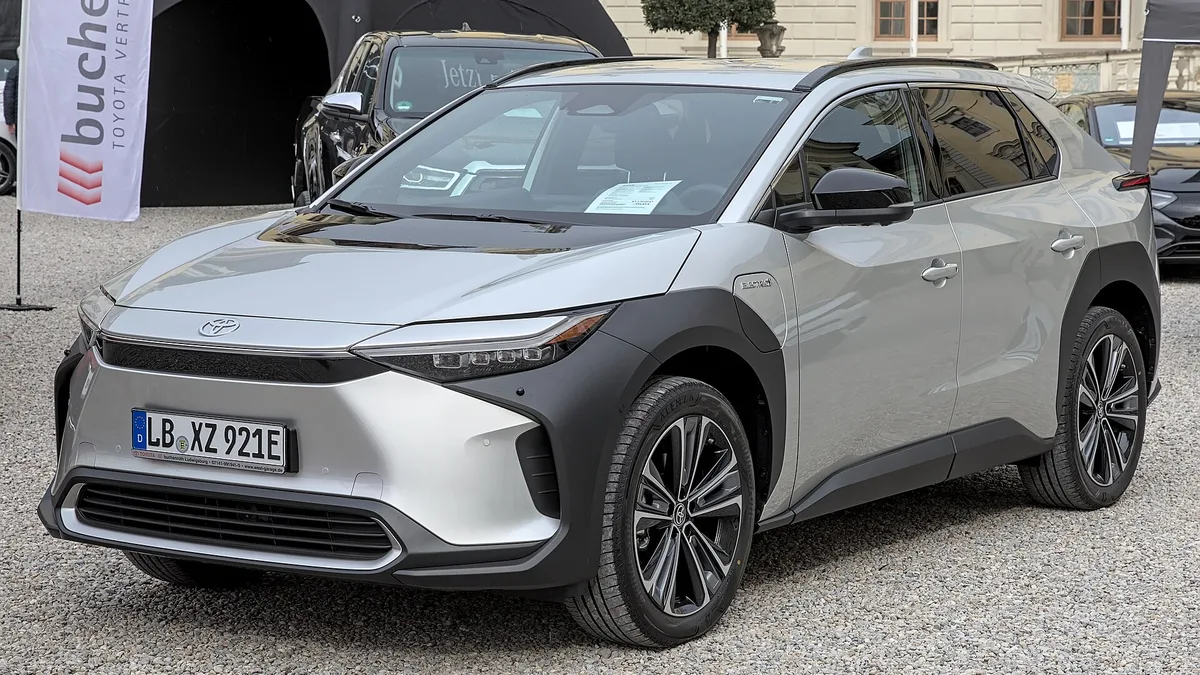
Toyota Bz4X
| Manufacturer | Toyota |
|---|---|
| Vehicle type | Battery electric compact crossover SUV |
| DC fast charging standard | CCS (North America), CCS or CHAdeMO (varies by market) |
| Maximum DC fast charging rate | 150 kW |
| Approximate EPA range | 252 miles (varies by trim and drive configuration) |
| Drive configurations | Front-wheel drive or all-wheel drive |
| Original use | Personal transportation |
Origin and history
The Toyota bZ4X originates from Japan, representing Toyota's first dedicated global battery electric vehicle. It was developed and launched in the early 2020s as a cornerstone of the Toyota bZ ("beyond Zero") sub-brand. Its creation followed years of Toyota's focus on hybrid and hydrogen fuel-cell technology, marking a strategic pivot to battery-electric platforms. The vehicle was developed in conjunction with Subaru, which sells a closely related model called the Solterra. This joint development leveraged Subaru's expertise in all-wheel-drive systems and Toyota's manufacturing scale. The bZ4X entered production as a 2023 model year vehicle in most global markets, establishing Toyota's direct entry into the mainstream electric SUV segment.
What it is designed for
The Toyota bZ4X is designed as a practical, five-passenger compact electric SUV for daily commuting and family use. It is engineered to provide a familiar, reliable driving experience for existing Toyota customers transitioning to electric power. The vehicle prioritizes cabin space and a comfortable ride over sporty performance or leading-edge acceleration figures. Its design focuses on real-world efficiency and predictable range, rather than competing directly with the longest-range or fastest-charging EVs on the market. The available front-wheel-drive and all-wheel-drive systems aim to deliver secure handling in various weather conditions. As a Toyota, it is fundamentally designed for durability and low total cost of ownership within the EV landscape.
Development and versions
The bZ4X was developed on the e-TNGA platform, a dedicated modular architecture for electric vehicles co-created by Toyota and Subaru. Initial development versions emphasized a rigid body structure and a low center of gravity for stable handling. The production model was offered in distinct versions primarily defined by their drivetrain: a front-wheel-drive model with a single motor and an all-wheel-drive model with dual motors. The all-wheel-drive system, co-developed with Subaru, is branded as "X-MODE" and includes specific traction controls for off-pavement and slippery conditions. Early production faced a significant recall for wheel hub bolts that could loosen, a problem that was thoroughly addressed before sales resumed. Different battery pack configurations and software calibrations were deployed for various global regions, leading to variations in published range and power figures.
Pros and cons
A significant pro is the bZ4X's straightforward and user-friendly interior, which avoids overly complex controls and feels robustly assembled. The ride quality is generally compliant and quiet, aligning with expectations for a comfortable family SUV. However, a notable con is its comparatively slow DC fast-charging capability, which can peak well below the rates offered by competing Hyundai, Kia, or Volkswagen Group EVs, making longer road trips less convenient. The infotainment system is frequently criticized for being sluggish and unintuitive, lacking the responsiveness of modern systems. Regrets often come from buyers who prioritized brand loyalty over feature comparison, discovering the bZ4X lacks the technological polish, charging speed, or performance of key rivals at a similar price point. A common mistake is not understanding the real-world impact of its charging curve, where the charging speed drops significantly as the battery state of charge increases, leading to longer-than-expected stop times on journeys.
Who it suits
It is a sensible choice for existing Toyota hybrid owners seeking a similar driving feel and ownership experience in a fully electric vehicle. The vehicle suits households needing a dependable second car for suburban errands and school runs, where its range is more than adequate and home charging is available. It appeals to drivers who are wary of overly complex technology and prefer physical buttons for core climate controls. The all-wheel-drive version is appropriate for buyers in regions with moderate snow who value secure traction but do not require serious off-road capability. It is not suited for technology enthusiasts, frequent long-distance travelers reliant on public fast-charging networks, or performance-oriented drivers.
Latest Toyota Bz4X news
Latest reporting
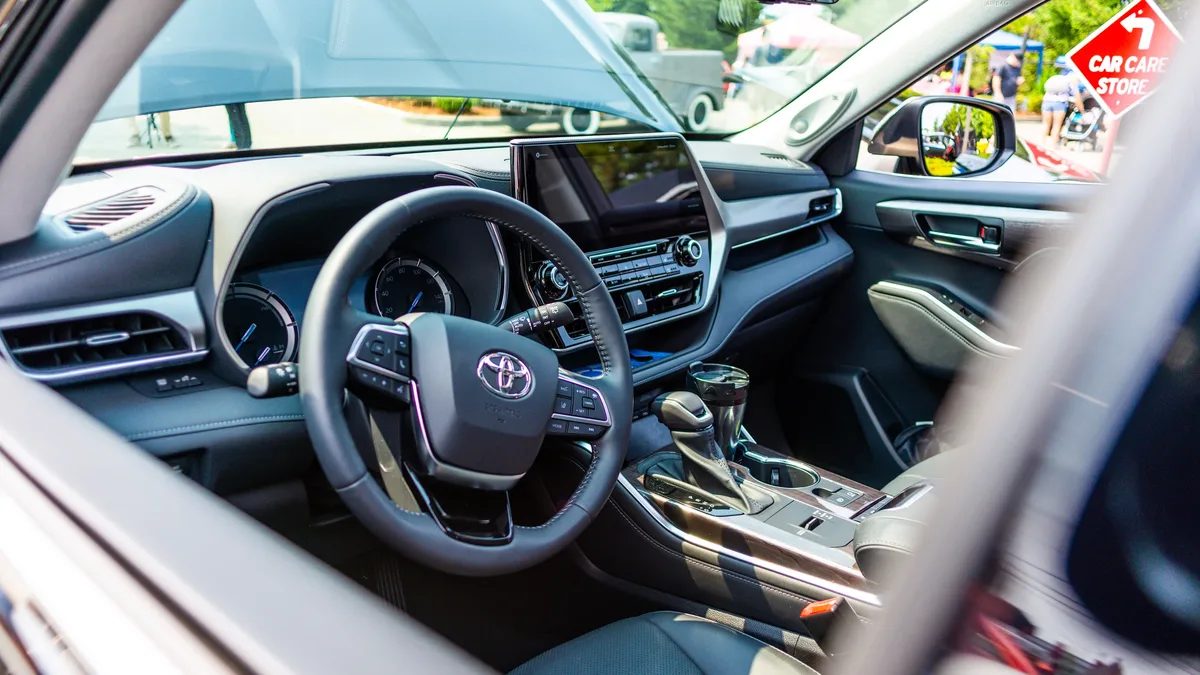
Toyota's $14,000 bZ3X EV spotted testing in right-hand drive
Toyota's best-selling Chinese electric SUV, the bZ3X, has been seen testing overseas in a right-hand-drive configuration.
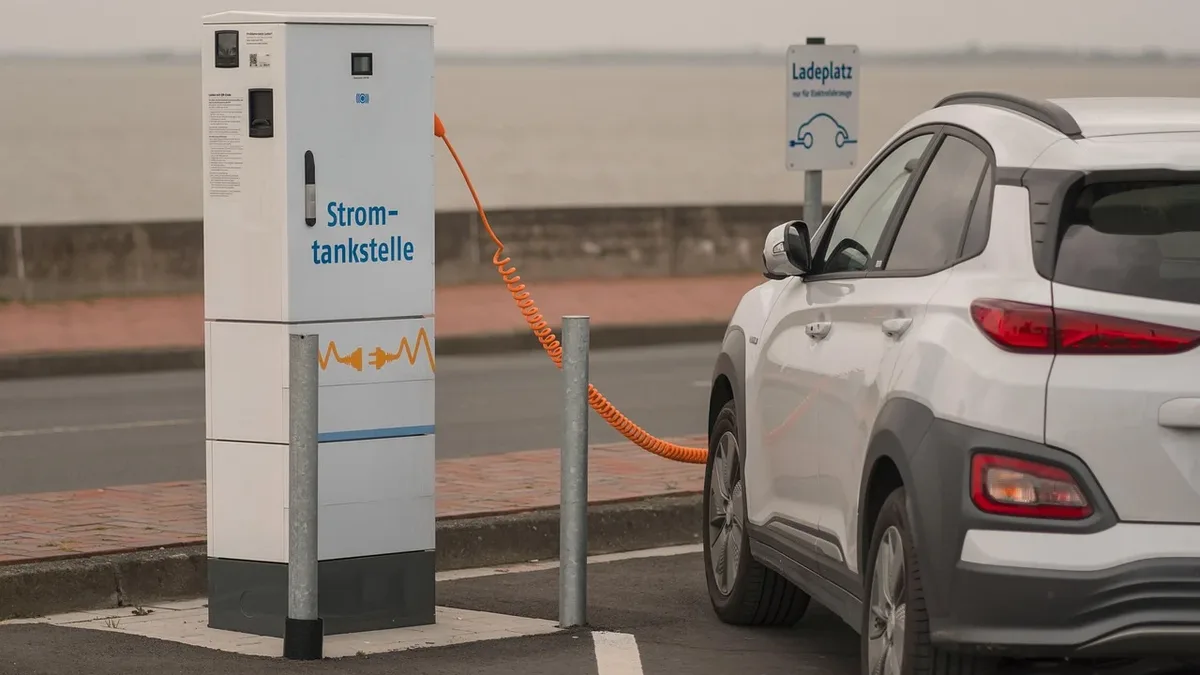
Toyota's electric SUV sales surge to nearly 5,000 in August
Toyota led U.S. EV sales growth in August, selling 4,964 units, a 35% increase from July. The automaker's updated bZ SUV, now with a built-in NACS...
Toyota's Guardrail ADAS in 2028 Models
Toyota plans to launch a new advanced driver assistance system in 2028, aiming for capabilities between Level 2 and Level 3 autonomy.
Nissan Rogue e:Power Hybrid SUV Launches in
Nissan will launch its Rogue e:Power hybrid SUV in the U.S. In November, aiming to compete with the Toyota RAV4 and Honda CR-V Hybrid.
2027 Toyota bZ Now on Sale, Starting at $34,980 in the US and CA$45,985 in Canada
The 2027 Toyota bZ is now available for purchase, with prices starting at $34,980 in the US and CA$45,985 in Canada. The electric SUV features...