Tesla FSD Navigates Tight Danish Streets in Test Drive
A Tesla using Full Self-Driving (Supervised) successfully navigated the narrow, crowded streets of Aarhus, Denmark, in a 21-minute test drive.
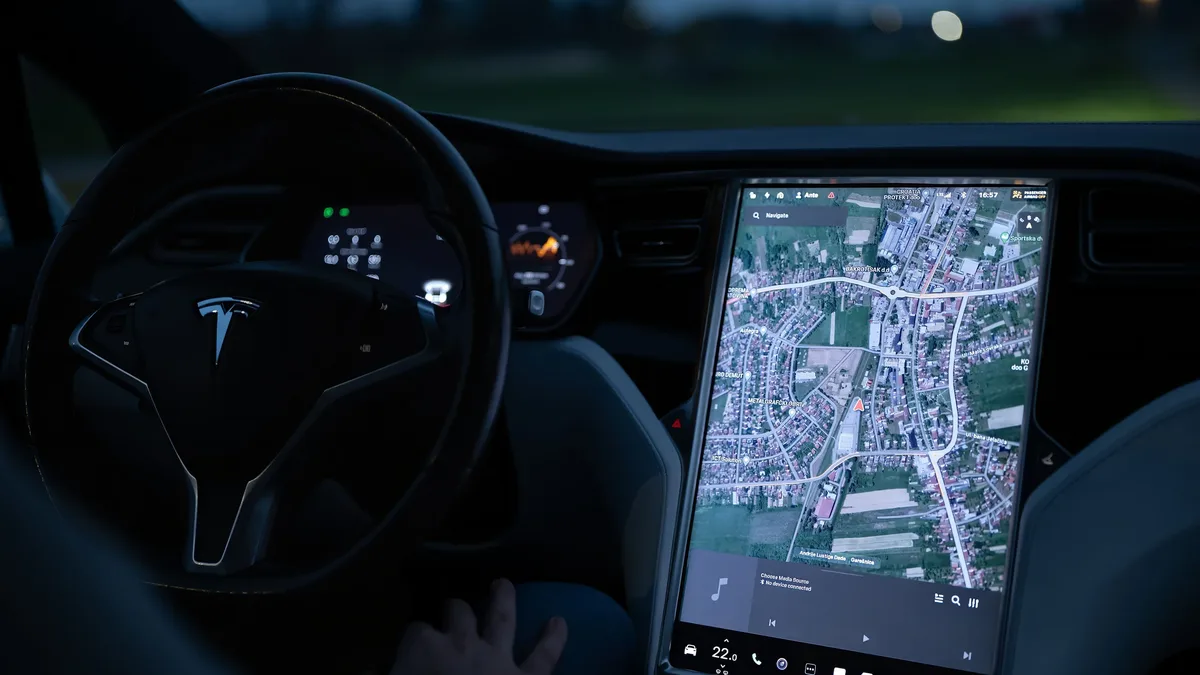
A Tesla vehicle equipped with Full Self-Driving (Supervised) successfully navigated some of the tightest streets in Aarhus, Denmark, during a 21-minute test. According to a video uploaded by robot*irl, the drive through the city center featured narrow cobbled lanes crowded with pedestrians, cyclists, and cafe customers, presenting a significant challenge for the automated system.
Throughout the video, the driver did not touch the controls. The Tesla system demonstrated impressive judgment in tight spaces, though it occasionally moved more slowly than a human driver might. It handled oncoming cars, strollers parked on the roadside, and pedestrians who walked into its path.
Handling Complex Urban Scenarios
The car consistently waited for cyclists before turning or moving into the oncoming lane. It inched past obstacles with precision and even paused for a dog crossing the road. During one particularly difficult encounter, the Tesla navigated a narrow passage complicated by an oncoming car and a stroller, adjusting its position to squeeze through a situation that might have unsettled a human driver.
Later, the system negotiated another tight gap next to roadworks. The local who provided the Tesla for the test, sitting in the passenger seat, admitted he had not previously taken the FSD system through some of these specific streets. This suggests the drive was exploratory, presenting unusual situations for the car to react to.
Minor Errors and System Limitations
The drive was not flawless, but the errors were minor. The Tesla moved one wheel into the oncoming lane to avoid an obstacle without using its turn signal. In another instance, it stopped too far from a traffic light. Given the complexity of the route, the absence of more serious mistakes was notable.
The demonstration shows the system's capability in dense urban environments. However, it still requires active human supervision. Navigating a crowded Danish street is a different challenge from achieving regulatory approval for drivers to take their eyes off the road.
The Road to Driverless Operation
The timeline for unsupervised, "eyes-off" operation in Europe remains unclear and is expected to be longer than in the United States. Meanwhile, Tesla has begun passenger operations with its Cybercab in Texas. Early onboard videos from these driverless rides, which have no steering wheel or pedals, show uneventful and relaxing journeys.
Making such driverless experiences seem ordinary is a significant step. However, a limited, geofenced rollout in Austin does not mean the system is ready for every European street, even if it can already handle a slow crawl through a Danish cafe district very well.