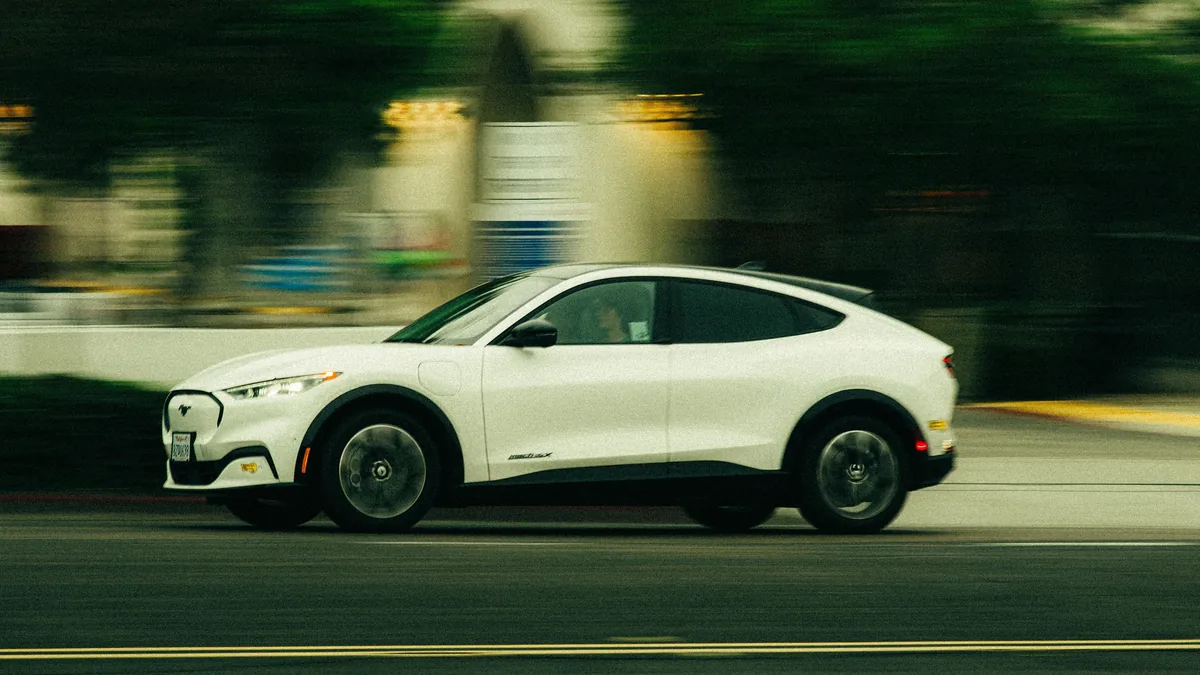
$70 100K
| Country of origin | United States |
|---|---|
| First created | 2010s |
| Original use | Premium electric SUV |
| Charging connector type | Tesla North American Charging Standard (NACS) |
| DC fast charging peak power | High (over 200 kW) |
| Drivetrain | Dual-motor all-wheel drive |
| Seating capacity | 5 to 7 |
| Vehicle size | Mid-size SUV |
Origin and history
It was first launched and delivered to customers in the mid-2010s. This model was developed by a manufacturer known for its focus on electric powertrains and advanced software integration. Its introduction marked a significant expansion of its brand's lineup into the premium SUV segment. The vehicle's design and engineering were centered in California, with global manufacturing facilities established later. The model's name reflects its positioning within the brand's alphanumeric naming structure for vehicle types.
What it is designed for
Its primary design goals combine passenger and cargo utility with exceptional acceleration and driving dynamics uncommon for its size. The vehicle is engineered for long-distance travel, supported by its large battery capacity and access to a proprietary fast-charging network. It accommodates up to seven adults with an optional third-row seating configuration. The design incorporates a low drag coefficient to maximize highway range efficiency. A key design focus is the integration of advanced driver-assistance systems and over-the-air software updates for ongoing feature enhancements.
Development and versions
The first production versions were offered in dual-motor all-wheel-drive configurations. Subsequent development introduced a high-performance variant with additional motors, significantly increasing power output and reducing acceleration times. Over-the-air software updates have continually refined the vehicle's performance, user interface, and autonomous driving capabilities. Later model years saw iterative improvements to battery chemistry, resulting in increased range, and updates to interior materials. The vehicle's hardware, including camera and sensor suites, has been revised across versions to support more advanced functionality.
$70 100K range
Official EPA estimates for different versions have historically ranged from the mid-300s to the high 300s in miles per full charge. Real-world highway driving at sustained speeds can reduce this range, particularly in very cold or very hot weather where battery conditioning is active. The vehicle's range is directly tied to its use of the manufacturer's proprietary Supercharger network for rapid long-distance travel. Access to this network allows for reliable route planning with predictable charging stop durations. Using only public third-party DC fast chargers often results in slower charging speeds and less predictable availability, impacting effective range on trips.
$70 100K interior
Standard seating configurations include five seats, with six or seven-seat layouts available as options using second-row bench or captain's chairs. Cabin materials have evolved across model years, with later versions offering more varied upholstery choices and trim options. The expansive glass roof is a standard feature, contributing to a sense of cabin spaciousness. Cargo space is substantial behind the second row and expands further with both rear rows folded flat. Criticisms have included earlier builds having minimalist interiors with perceived material quality not matching traditional luxury competitors, though this has been addressed in updates.
$70 100K lease
A key component of the lease structure is the inclusion of guaranteed residual value, which is set at the contract's inception. Lessees usually remain responsible for insurance, maintenance, and any wear-and-tear charges beyond normal use at the lease's termination. The lease package generally includes full access to the manufacturer's Supercharger network, which may be bundled as a cost or require a separate subscription in certain model years. At lease end, the lessee can return the vehicle, purchase it at the predetermined residual value, or lease a new vehicle.
Pros and cons
A significant pro is seamless, reliable long-distance travel enabled by the integrated, proprietary Supercharger network, which offers superior route planning and charging speed consistency compared to public networks. The performance is a major advantage, providing acceleration that rivals high-performance sports cars despite the vehicle's size and utility. A common con is the high cost of repair following even minor collisions, often requiring specialized parts and labor that lead to lengthy service center visits. Owners who frequently travel to regions with sparse Supercharger coverage regret the choice, as dependence on third-party charging networks introduces unreliability and slower speeds. The common mistake is underestimating the impact of cold weather on real-world range and the energy consumption of the vehicle's climate systems. The minimalist control interface, while sleek, is a con for some who find it distracting to adjust basic functions like windshield wipers or ventilation through touchscreen menus.
Who it suits
This vehicle suits families requiring substantial passenger and cargo space who also prioritize cutting-edge technology and performance over traditional luxury interior appointments. It is well-suited for individuals who frequently undertake long-distance road trips along major corridors well-served by the manufacturer's proprietary fast-charging network. Tech-oriented buyers who value continuous software updates that add features and improve vehicle performance over time will find it a match. It is less suitable for buyers whose primary charging will be from public third-party networks, due to the variability in charger reliability and speed. The vehicle also suits those who have access to reliable home charging, as this mitigates daily range concerns and maximizes cost savings versus gasoline. It is not ideal for buyers who prefer physical controls for all vehicle functions or who prioritize plush, quiet cabin insulation over a connected, performance-focused driving experience.