
Electrify America
| Owner | Volkswagen Group of America |
|---|---|
| First created | 2017 |
| Country of origin | United States |
| Original use | Public electric vehicle charging |
| Charger types | DC fast, Level 2 |
| Network size | Hundreds of stations, thousands of chargers |
| Coverage | National network across the United States |
Origin and history
Electrify America is a public electric vehicle DC fast-charging network operating in the United States. It was established in the late 2010s as a result of a legal settlement following the diesel emissions controversy involving the Volkswagen Group. The network's creation was mandated by the United States Environmental Protection Agency and the California Air Resources Board as part of Volkswagen's mitigation efforts. Consequently, its country of origin is the United States, though it is funded by the German automotive conglomerate. The initial plan committed Volkswagen to investing two billion dollars over a ten-year period to build charging infrastructure. The network's first charging stations became operational in the latter part of the 2010s, marking the beginning of its national rollout.
What it is designed for
The network is specifically designed to provide high-power DC fast charging for battery electric vehicles on long-distance journeys across the United States. It primarily serves vehicles that use the Combined Charging System (CCS) connector, which is the standard adopted by most American, European, and Korean automakers. A secondary function is to support the CHAdeMO charging standard, primarily for the Nissan Leaf and some older models, though this support is being phased out at new installations. The infrastructure is engineered to accommodate future increases in vehicle battery capacity and charging speeds by deploying high-capacity hardware. It is intended to be a publicly accessible, open network available to all EV drivers, not just owners of Volkswagen-branded vehicles. The strategic placement of stations along major highway corridors and in metropolitan areas aims to reduce range anxiety and enable interstate EV travel.
Development and versions
The network's development has occurred in distinct investment cycles, known as "cycles," each with specific capital allocations and geographic focus areas. Initial deployment focused on establishing a foundational presence along major interstate highways and within select metropolitan zones. Subsequent cycles expanded station density in existing regions and pushed network coverage into new states and rural corridors. The network has also continuously updated its station software and mobile application to improve reliability and user experience, addressing early technical shortcomings. Future development plans include deploying next-generation chargers with enhanced cooling systems and more robust connectivity to improve uptime.
Pros and cons
A primary advantage is the network's extensive geographic coverage along critical travel corridors, making it often the only viable option for long-distance travel in certain regions. A major and well-documented con is inconsistent reliability, where chargers can be inoperative, derated to lower power, or suffer from payment system failures, causing user frustration. The pricing structure, often based on per-minute or per-kWh rates that vary by state regulations, can be complex and lead to unexpectedly high costs, especially for slower-charging vehicles. Users frequently report a suboptimal maintenance experience, with damaged cables, poor site lighting, and cluttered stalls diminishing usability. The common mistake is arriving at a station without checking its real-time status via the app, potentially leading to a wasted trip or a lengthy wait for the only functional dispenser.
Who it suits
This network best suits drivers of modern EVs equipped with CCS ports and robust thermal management systems capable of utilizing high charging speeds, such as those from Audi, Ford, Hyundai, Kia, and Volkswagen. It is a critical resource for owners undertaking frequent long-distance road trips where its highway corridor coverage is a necessary utility. The network can also suit urban dwellers without home charging who need a rapid top-up, provided a reliable station is conveniently located. It is less suitable for owners of vehicles with small batteries, low maximum charge rates, or CHAdeMO connectors, as the cost-per-minute can be high and connector availability is dwindling. Drivers who prioritize predictable, hassle-free charging sessions and consistent user experience may find the network's reliability issues a significant drawback. It is a necessary service for many, functioning more as essential infrastructure than a premium product, and suits those who plan ahead, verify station status, and maintain backup options.
Latest Electrify America news
Latest reporting
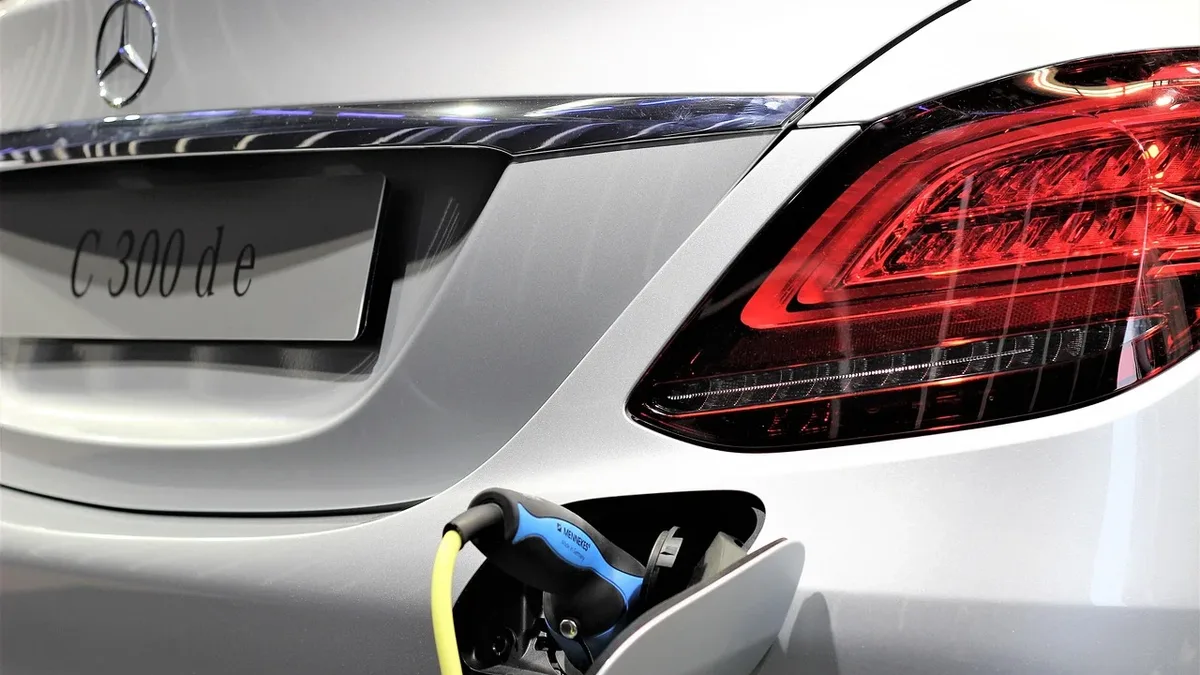
2027 Mercedes CLA Electric Fast-Charging Test Results
Independent testing of the 2027 Mercedes-Benz CLA 350 4MATIC Electric shows its DC fast-charging performance on Electrify America and Ionna networks
Port Authority, CALSTART launch $45M
The Port Authority of New York and New Jersey and nonprofit CALSTART are launching a $45 million program to electrify heavy-duty port trucks.

LG Energy Solution Shares Concerns Over Solid-State Battery Mass Production
LG Energy Solution's North America president, Robert Lee, expressed concerns over the mass production of solid-state batteries, stating that most...
Wawa Expands EV Charging Network Beyond Tesla
Convenience store chain Wawa is introducing its own branded EV charging stations in Pennsylvania, in partnership with Electrify America.

America Doesn't Need Faster E-Bikes, It Needs Better Small Electric Vehicles
The electric bike industry has been focused on increasing speed, but some argue that this is not the right approach. Instead, they propose creating a...

LiuGong's 924FE Electric Excavator to Debut in America
LiuGong's 924FE 30-ton electric excavator is set to arrive in North America, boasting improved performance and reduced operating costs compared to...