Point Of Sale Rebate
| Incentive type | Rebate |
|---|---|
| Application method | At time of purchase |
| Eligibility | Varies by jurisdiction |
| Funding source | Manufacturer or dealer |
| Tax treatment | Typically reduces taxable purchase price |
| Common form | Instant discount or cashback |
| Redemption process | Automatic or via claim form |
Origin and history
The Point Of Sale (POS) rebate as a formal consumer incentive originated in North America, with its principles deeply rooted in retail and automotive sales practices of the late 20th century. It emerged as a direct alternative to traditional mail-in rebates, which were common but often criticized for their complexity and low redemption rates. The concept gained significant structural and governmental backing in the United States during the early 21st century with the advent of federal tax credits for energy-efficient products and vehicles. Its application to electric vehicles (EVs) became prominent alongside legislative efforts to simplify consumer access to clean energy subsidies. The model was formally adopted and adapted by various U.S. state-level programs before influencing policy discussions in other regions, including Canada and parts of Europe. This evolution positioned the POS rebate as a key mechanism for translating policy goals into immediate consumer price reductions.
What it is designed for
A Point Of Sale rebate is designed to provide an immediate, upfront price reduction on a qualifying purchase, directly at the time of transaction. Its primary purpose is to eliminate the delay, paperwork, and uncertainty associated with post-purchase rebates or tax credits that require consumers to wait for reimbursement. In the context of electric vehicles, it is specifically engineered to lower the effective purchase price visibly on the sales contract, thereby making EVs more competitively priced against internal combustion engine vehicles at the decisive moment of purchase. This mechanism is intended to overcome consumer hesitation related to higher initial costs, which is a well-documented barrier to EV adoption. Furthermore, it shifts the administrative burden of claiming the incentive from the individual buyer to the registered dealer or retailer, who is subsequently reimbursed by the governing program administrator. The design aims to ensure the financial benefit is instantly realized, increasing the incentive's effectiveness and transparency for the end consumer.
Development and versions
The development of Point Of Sale rebates has progressed from informal dealer discounts to structured, government-regulated programs with specific eligibility criteria. Early versions were simple, often offered directly by manufacturers or dealers as a sales promotion tool without a standardized framework. The significant development occurred with the integration of these rebates into official government incentive programs for energy efficiency, where they became a formalized payment option alongside traditional tax credits. A key version is the "elective" or "assignable" tax credit, where the consumer can choose to transfer their future tax credit entitlement to the dealer at the point of sale in exchange for an immediate price reduction, with the dealer then claiming the credit from the government. Another version is the direct, non-taxable cash rebate administered by a state or provincial agency, where the dealer submits a claim on the buyer's behalf and deducts the amount from the sale price. Program rules vary by jurisdiction, with differences in vehicle eligibility thresholds, income caps for buyers, and dealer registration requirements. Technological development has also led to digital verification systems at the point of sale to instantly confirm a vehicle's and buyer's eligibility against program databases.
Pros and cons
A primary advantage of a Point Of Sale rebate is its immediate financial impact, which lowers the barrier to entry by reducing the down payment and monthly financing amounts for the consumer. It simplifies the purchasing process by integrating the incentive directly into the transaction, making the final cost clear and avoiding complex tax calculations. For the broader adoption of EVs, this immediacy is considered more effective than delayed tax credits at influencing purchase decisions. However, a significant con is the administrative complexity and cash-flow burden placed on dealerships, which must front the rebate amount and navigate reimbursement procedures, potentially leading to reluctance among some dealers to participate. Consumers can regret choosing a POS rebate if they later discover they would have benefited more from a non-refundable tax credit due to their specific tax liability situation, as the POS option is often a one-time, irreversible election. A common mistake is for buyers to assume all EVs or all transactions qualify, without verifying precise program requirements regarding vehicle price caps, battery component sourcing, or their own adjusted gross income, which can result in a surprise disqualification and a higher final price than anticipated. The reliance on dealer expertise and accurate paperwork also introduces a point of potential error where mistakes in application can delay reimbursement to the dealer and create liability for the buyer.
Who it suits
Point Of Sale rebates best suit EV buyers who prioritize immediate cost reduction and simplicity over maximizing a potential future tax benefit. They are particularly suited to individuals or households with lower tax liability, for whom a non-refundable tax credit might offer little to no value, as the POS rebate provides the full incentive amount regardless of tax owed. This mechanism also advantages buyers with limited cash reserves for a down payment, as the effective reduction occurs upfront. It suits consumers who prefer a straightforward transaction without the need to understand tax code intricacies or to wait for a future filing season to realize savings. From a dealer perspective, it suits well-organized dealerships with the administrative capacity to manage the claim process and the financial stability to temporarily front the rebate amount while awaiting government reimbursement. Finally, it suits policy structures aimed at accelerating broad market adoption by making the incentive universally accessible and immediately apparent at the critical moment of purchase decision.
Latest Point Of Sale Rebate news
Latest reporting

Sondors' $10,000 Electric Car Prototype Listed on eBay
The sole prototype of Sondors' abandoned three-wheeled electric car is for sale on eBay for $10,000, the same price the company once targeted for the

Kia launches EV3, EV4, and EV5 GT
Kia has expanded its electric GT lineup with performance versions of the EV3, EV4, and EV5, now on sale in Europe with dual-motor AWD, unique design...
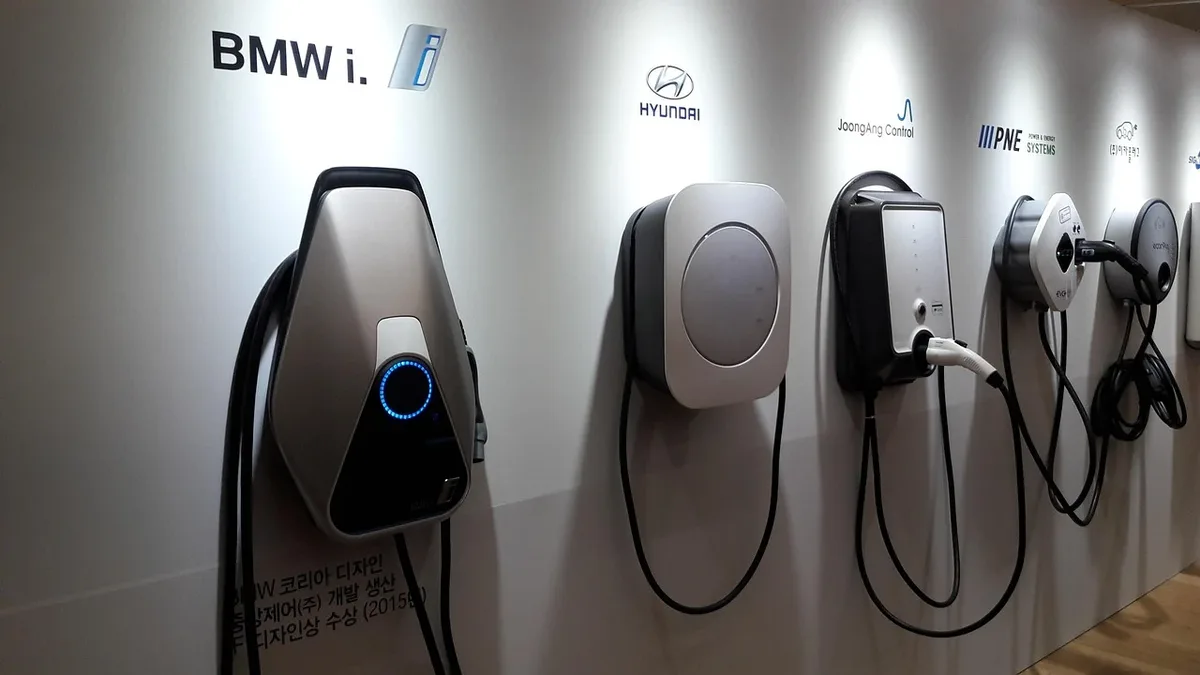
IONNA Cuts EV Fast Charging Rates Nearly 50% for Labor Day
IONNA is offering a holiday charging sale of $0.20 per kWh from September 4-7, nearly half its standard rate. Drivers of BMW, Hyundai, Mercedes-Benz...
Segway, Anker, EGO Deals in Amazon Labor Day
Amazon's Labor Day Sale features discounts on electric scooters, e-bikes, and power stations, including the Segway ZT3 Pro e-scooter for $850, the...
Exclusive EV Deals: Heybike Hero e-Bike, EcoFlow Power Station, and More
Get the latest on exclusive EV deals, including the Heybike Hero 750W Mid-Drive Carbon-Fiber All-Terrain e-bike at a new low of $1,049.50, and...

2027 Toyota bZ Now on Sale, Starting at $34,980 in the US and CA$45,985 in Canada
The 2027 Toyota bZ is now available for purchase, with prices starting at $34,980 in the US and CA$45,985 in Canada. The electric SUV features...