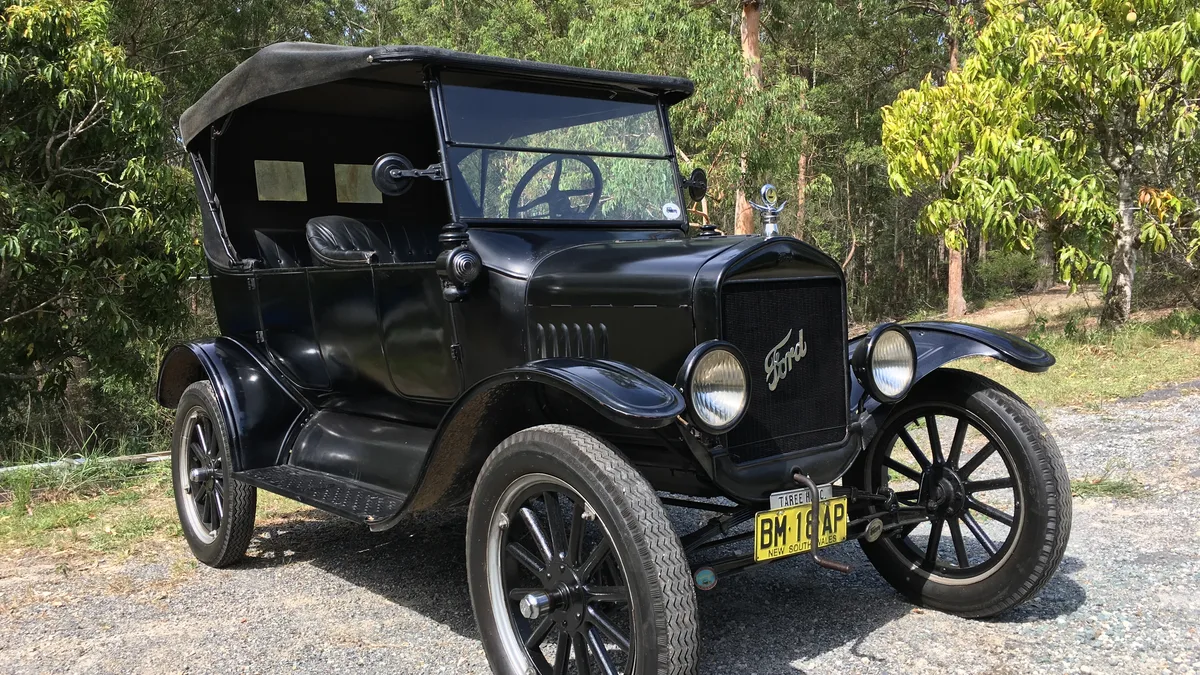
Ford
| Model name | Ford Mustang Mach-E |
|---|---|
| Country of origin | United States |
| First created | 2020 |
| Body style | SUV |
| Drive type | Rear-wheel drive or all-wheel drive |
| Battery type | Lithium-ion |
| Charging network compatibility | FordPass, BlueOval Charge Network, CCS (Combined Charging System) |
Origin and history
Ford is an American automotive manufacturer founded in the early 20th century. The company was established by Henry Ford in Dearborn, Michigan, United States. Its origins are closely tied to the development of the moving assembly line for mass production. This innovation revolutionized manufacturing and made automobiles accessible to a broader public. The company's early focus was on internal combustion engine vehicles, which dominated its production for over a century. Ford's entry into the modern electric vehicle market represents a significant strategic shift from its historical core business.
What it is designed for
Ford's electric vehicles are designed primarily for personal and family transportation, mirroring the utility of their gasoline-powered counterparts. They are engineered to offer a zero-tailpipe-emission alternative for drivers seeking to reduce their environmental impact. Specific models target different market segments, from commercial fleets to performance-oriented drivers. The design philosophy emphasizes retaining the familiar driving dynamics and capabilities, such as towing and cargo space, associated with traditional Ford trucks and SUVs. A key design consideration is compatibility with public DC fast-charging networks to enable longer journeys. The vehicles are also designed to integrate with connected home charging solutions for daily convenience.
Development and versions
Ford's modern electric vehicle development accelerated in the late 2010s with significant investment in dedicated EV platforms. The Mustang Mach-E, a battery-electric crossover, was among the first of this new generation, leveraging a iconic nameplate for electric propulsion. The F-150 Lightning followed, applying electric powertrain technology to the bestselling pickup truck in the United States. The E-Transit represents Ford's entry into the commercial electric van market. These vehicles are developed on distinct architectures optimized for battery placement and electric motor configuration. Ongoing development focuses on increasing range, reducing charging times, and introducing new models across various segments.
Ford range
The real-world range of Ford electric models varies significantly between vehicles and is influenced by trim level, battery size, and driving conditions. The Mustang Mach-E is offered with standard-range and extended-range battery options, with EPA estimates spanning a broad spectrum. The F-150 Lightning provides range estimates suitable for both daily use and longer hauls, with professional-grade trims often featuring the highest capacity. The E-Transit, designed for commercial duty cycles, typically has a lower EPA-estimated range optimized for urban delivery routes. All ranges are subject to reduction under extreme temperatures, particularly in very cold climates where battery efficiency decreases. Ford provides official EPA range estimates, which serve as the standardized comparison metric.
Ford interior
Ford electric vehicle interiors prioritize digital interfaces and modern design while maintaining functional layouts. A common feature across models is a large, vertically oriented touchscreen that houses the infotainment and vehicle settings. Interior space is often maximized through the absence of a traditional transmission tunnel, allowing for flatter floors. Sustainable materials, such as recycled fabrics and plastics, are incorporated into seat trims and interior components. The cabin noise levels are generally lower than in combustion engine vehicles due to the absence of engine noise, though road and wind noise become more apparent. Storage solutions frequently include a front trunk, or "frunk," providing additional secured cargo space where the engine would traditionally be.
Ford lease
Leasing a Ford electric vehicle involves a standard automotive finance agreement for a fixed term, typically 24 to 36 months. Monthly lease payments are calculated based on the vehicle's capitalized cost, its projected residual value at lease end, and the money factor. A common consideration for EV leases is the inclusion of any federal or state tax incentives directly in the lease calculation, which can lower the effective cost. Lease agreements usually include mileage limitations, with penalties for exceeding the contracted annual distance. At the end of the lease term, the lessee returns the vehicle and is responsible for any excess wear and tear charges. Leasing can be an attractive option for drivers concerned about the pace of EV technological advancement and potential battery degradation.
Pros and cons
A significant pro is the seamless integration of electric powertrains into familiar, high-demand vehicle types like pickup trucks, reducing adoption friction. The access to extensive public charging networks, particularly the Tesla Supercharger network via an adapter, is a major advantage for long-distance travel. A common con is that some models have experienced real-world range figures notably below EPA estimates, especially in highway towing or cold weather, leading to owner frustration. Early software glitches and recalls related to high-voltage battery contactors have caused reliability concerns for some owners. The common mistake is for buyers to underestimate the importance of installing a Level 2 home charger, relying instead on slow public charging, which severely diminishes convenience. Some owners regret their choice when their regular driving patterns involve frequent long-distance trips through regions with sparse fast-charging infrastructure, leading to lengthy travel delays.
Who it suits
Ford electric vehicles suit current Ford truck or SUV owners seeking a direct transition to an electric powertrain without sacrificing vehicle type or utility. They are appropriate for households with reliable access to home charging, either in a garage or dedicated parking space. The F-150 Lightning specifically suits tradespeople or rural users who can leverage vehicle-to-load functionality for powering tools or equipment. The Mustang Mach-E suits drivers wanting a performance-oriented electric crossover with a sportier driving dynamic. These vehicles are less suitable for individuals living in multi-unit dwellings without guaranteed charging access or for those who routinely tow heavy loads over long distances. They are a strong fit for early adopters who value the combination of traditional brand identity with new technology.
Latest Ford news
Latest reporting
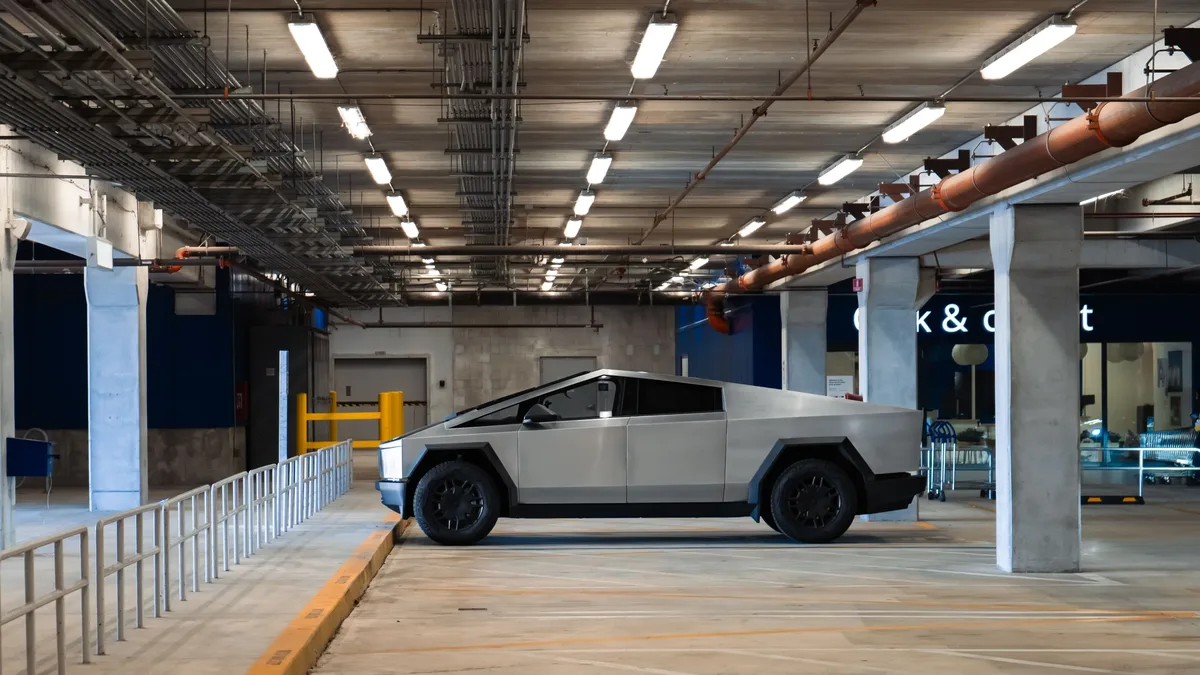
Tesla Cybercab Built Using 'Unboxed' Assembly Process
Tesla is using a new 'Unboxed' manufacturing technique to build its two-door Cybercab robotaxi. The method assembles the vehicle in modules on...
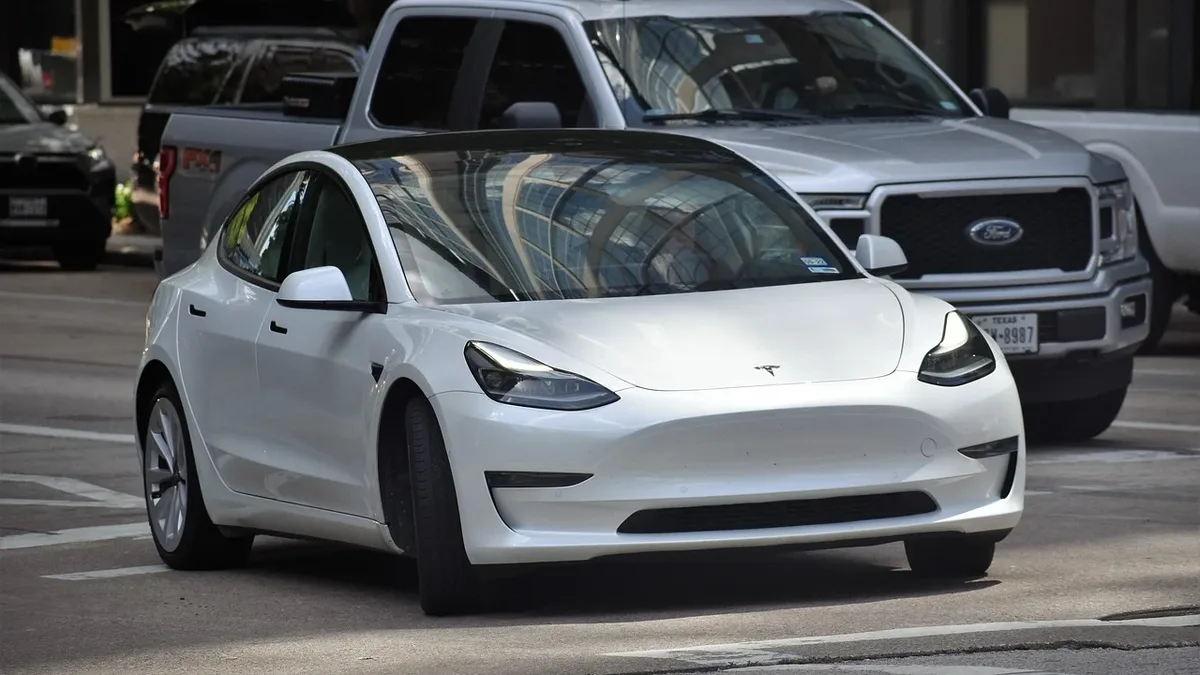
Ford Fathom EV Pickup Targets Tesla With Under $30,000 Price
Ford plans to launch its Fathom electric pickup truck for under $30,000, aiming to sell 100,000 units in its first year.
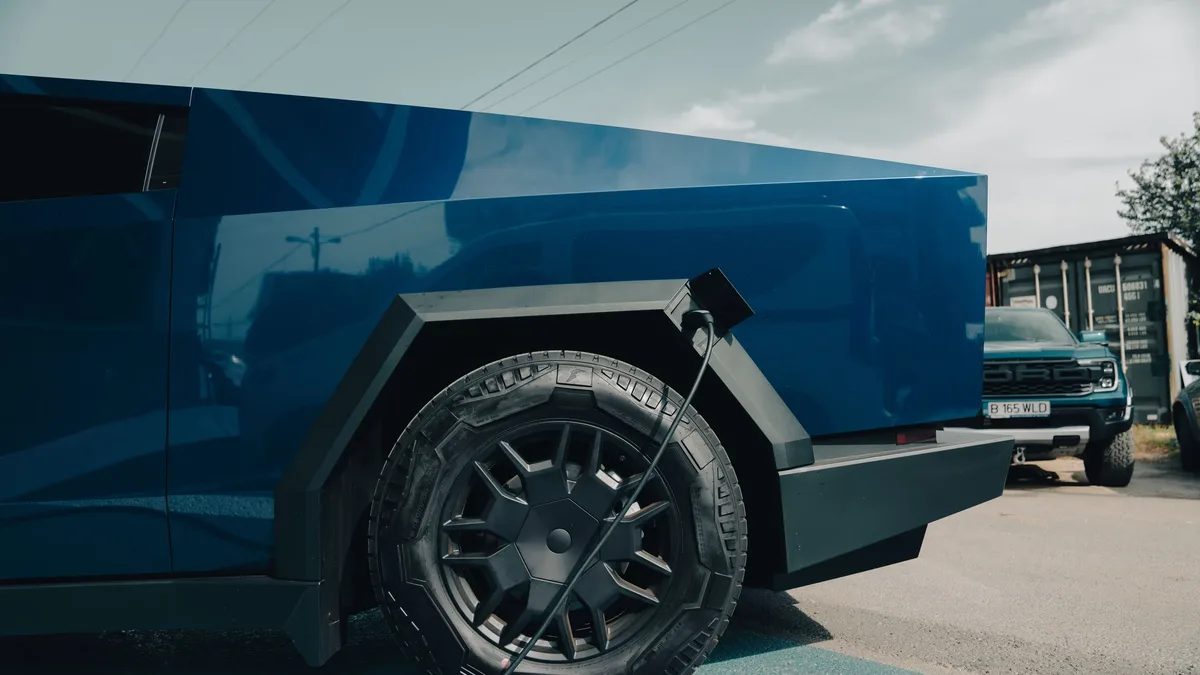
2027 Ford Fathom Electric Pickup Details Emerge
New images show the camouflaged 2027 Ford Fathom, a $30,000 electric pickup. It will debut fully in 2027 on a new platform with NACS charging.
Ford Fathom Survey: Threat to Slate Auto?
An Electrek survey of nearly 2,700 readers asked if Ford's upcoming $30,000 Fathom electric truck would doom the rival Slate Auto before launch.

WETOX D2 Adapter Earns World's First Next-Gen V2X Certification from SGS
WETOX' D2 power adapter has earned the world's first Next-Gen V2X certification from SGS, enabling it to turn millions of Teslas and Ford Mustang...