Tesla Cybercab Robotaxi Launches in Austin
Tesla has launched its steering wheel-free Cybercab robotaxi service in Austin, Texas, with an initial fleet of 45 vehicles.
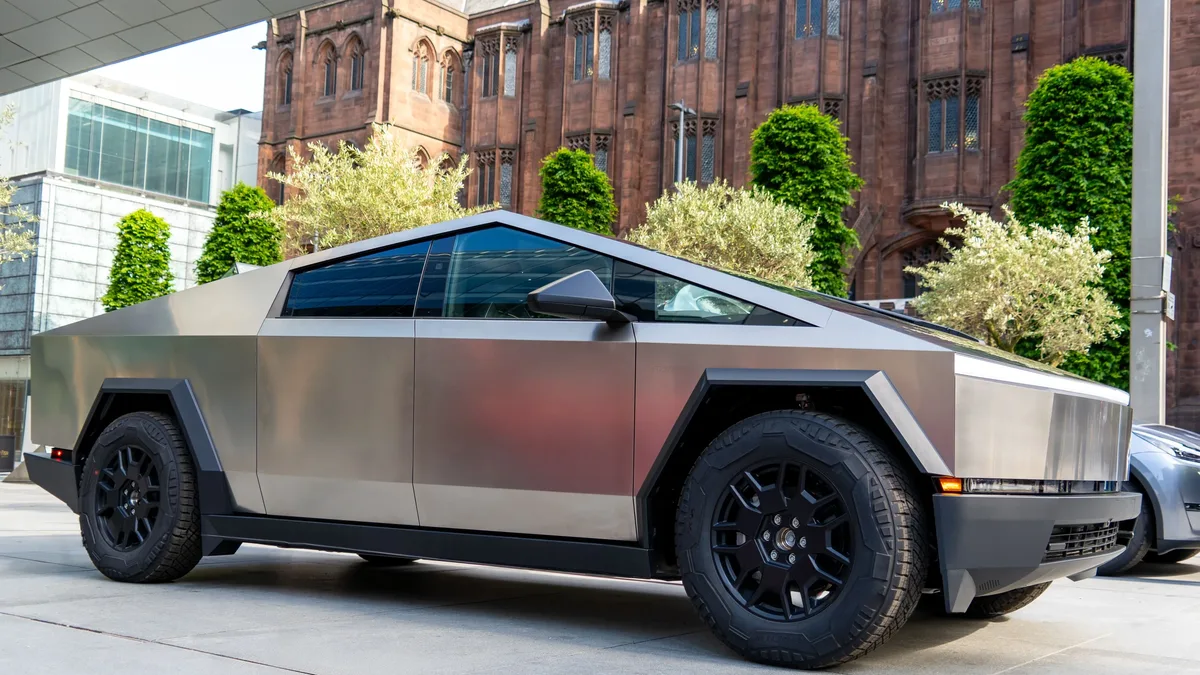
Tesla has officially launched its Cybercab robotaxi for public hailing in part of Austin, Texas. There are reportedly 45 of the vehicles operating in the city at launch.
Passengers can summon a Cybercab using Tesla's dedicated RoboTaxi smartphone app. The company states that upon entry, the vehicle will automatically adjust to the rider's preferred seating position and climate control settings. It will also resume playing whatever music or video stream was active on the passenger's phone through the car's infotainment system.
The vehicle is a stark departure from conventional car design. It has no steering wheel, pedals, or side mirrors, and its cabin is configured for just two passengers. A key design feature is its extremely low drag coefficient, which Tesla claims is under 0.20. This focus on aerodynamic efficiency is visually apparent in the vehicle's smooth shape and large, simplify hubcaps.
Powertrain and Battery Specifications
Tesla's engineering focus for the Cybercab centered on efficiency and cost reduction. The company says the vehicle's electric drive unit is 18 percent smaller and 25 percent lighter than other top-performing EV drive units, while also being more efficient. The Cybercab is powered by a 48-kilowatt-hour lithium-ion battery pack that incorporates Tesla's 4680-format battery cells.
| Component | Specification |
|---|---|
| Battery Pack | 48 kWh lithium-ion with 4680 cells |
| Drive Unit | 18% smaller, 25% lighter than other top performers |
| Drag Coefficient | Under 0.20 |
Manufacturing and Design
Production use Tesla's "unboxed manufacturing" process, which the automaker claims makes the assembly line 50 percent shorter and dramatically cuts costs. The vehicle's exterior also reflects this cost-cutting philosophy. Instead of using painted metal body panels, Tesla employs reaction injection molding (RIM) with gold-colored plastic. RIM is a process typically used for components like car fenders and dashboards. The report notes that avoiding traditional vehicle painting provides significant cost savings.
The vehicle relies solely on a camera-based sensor system for its autonomous driving functions, foregoing radar and lidar. For passenger access, the Cybercab is equipped with automatically opening and closing butterfly doors.
The launch marks the beginning of Tesla's commercial robotaxi service, though its future expansion remains unclear. For now, the initial fleet is confined to operating in a specific area of Austin.