Tesla Robotaxi fleet logs one million
Tesla's autonomous ride-hailing fleet has surpassed one million miles of operation without safety drivers, a sharp increase from 380,000 miles reported in
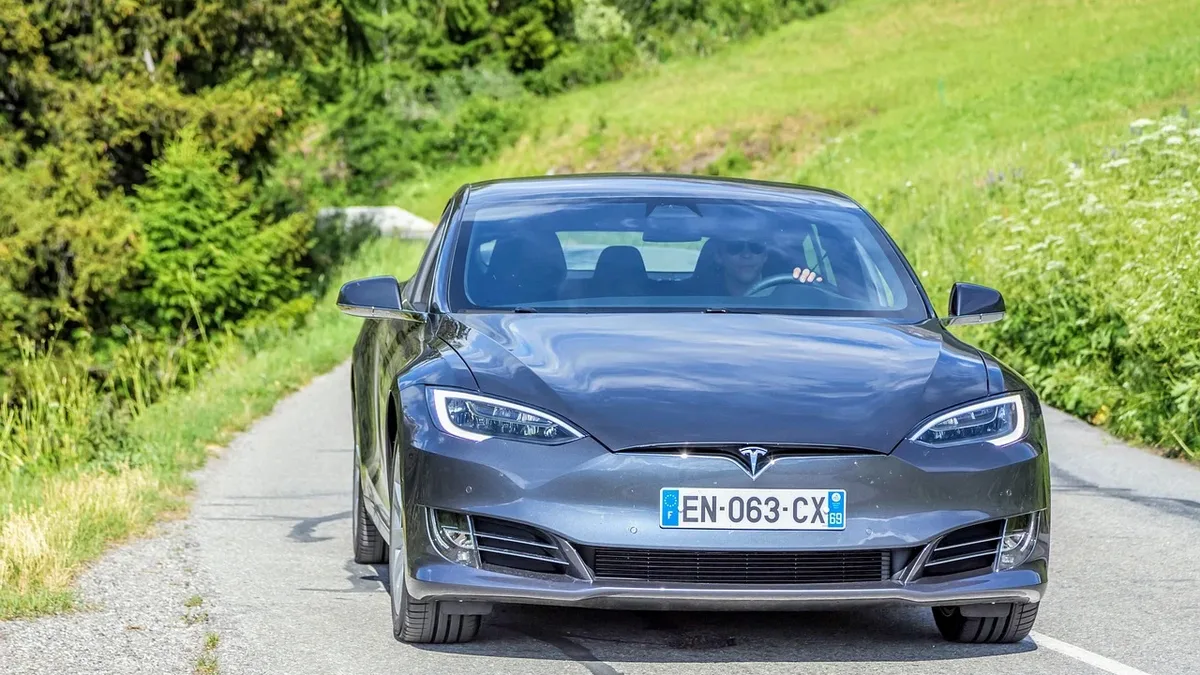
Tesla's Robotaxi fleet has driven more than one million miles without a safety driver in the vehicle. The company announced the milestone at its Cybercab event in Austin on September 3, 2026.
Tesla Vice President of AI Ashok Elluswamy told attendees the one-million-mile total was a sign of safety. The figure represents a rapid acceleration from the 380,000 unsupervised miles the company disclosed during its second-quarter earnings update in late July. In roughly six weeks, Tesla added about 620,000 miles of driverless operation.
Fleet expansion and operations
This acceleration followed Tesla's decision to remove in-vehicle safety monitors from most of its operations outside the San Francisco Bay Area. Tesla first launched Robotaxi service in Austin in June 2025 with safety drivers present. It later began fully unsupervised rides and expanded into Dallas, Houston, Miami, Orlando, and Tampa. The San Francisco Bay Area remains the exception, where a safety monitor still rides in the vehicle under California permitting rules.
The milestone arrived as Tesla began offering public Cybercab rides in Austin. The purpose-built vehicle has no steering wheel or pedals and is designed only for autonomous ride-hailing. Production versions joined the existing fleet of modified Tesla vehicles already operating in the service. Tesla has not released a city-by-city breakdown of the one million unsupervised miles, nor has it specified how many of the latest miles involved the new Cybercab versus the rest of the fleet.
Tesla's unsupervised mileage is growing at a double-digit weekly rate according to earlier company comments. Yet its fleet size remains modest compared with established competitors. Waymo has accumulated more than 200 million fully autonomous rider-only miles. Tesla has described its own unsupervised operations as having recorded zero notable incidents in the period leading up to the July update.
24-hour service on the horizon
On September 4, Tesla AI lead Ashok Elluswamy said 24-hour Robotaxi service is close. Replying on X to a rider who wanted Cybercab trips all night, he wrote that the capability would arrive "next month or so" once "the next tech to merge on the v15 plan" is ready. It is the clearest near-term timeline yet for overnight unsupervised operation.
Tesla's paid Robotaxi network currently runs from 6 a.m. To 10 p.m. Seven days a week across Austin, Dallas, Houston, Miami, Orlando, and Tampa. That 16-hour window is shorter than the 6 a.m. To 2 a.m. Schedule the company used for much of the prior year. Elluswamy did not name the specific feature or say whether the change would apply first to purpose-built Cybercabs, the existing Model Y fleet, or both.
Tesla has described its Full Self-Driving v15 as a step-change architecture. Early versions of that software already operate on the Robotaxi fleet and contain about 40 percent of the planned gains. Overnight service would test the system in lower-light conditions and would also raise vehicle utilization, a key variable for Robotaxi unit economics.
New safety feature for consumer FSD
Separately, Tesla is beginning to roll out Full Self-Driving Supervised v14.3.9 with a new active safety layer. This feature can take control even when the driver is operating the car manually. Tesla AI said the software can activate FSD on the driver's behalf when an imminent collision is detected and Automatic Emergency Braking may not be enough. It may also engage if the system detects heavy distraction or an accidental FSD disengagement.
Unlike conventional AEB, which mainly applies the brakes, this feature can use steering, braking, and acceleration together if the car calculates that stopping alone will not prevent impact and a safer path exists. The system may change lanes or move toward a shoulder when conditions allow, then continue driving after the immediate threat is handled. The intervention is meant as a last-resort safety net, not a replacement for attentive driving.
Secondary reports on internal release notes say the feature can fire while the car is being driven manually if cabin-camera monitoring suggests the driver is not sufficiently attentive. After the emergency maneuver, the car is expected to alert the driver and request a return to manual control. The feature still depends on FSD being enabled and an active FSD purchase or subscription. It does not make the vehicle unsupervised.
Regulatory attention
The launch of the Cybercab has caught the attention of the National Highway Traffic Safety Administration. According to the source, NHTSA has opened an inquiry and wants to know more about the vehicle. The agency's specific questions were not detailed in the report.
Whether the rapid recent growth of Tesla's unsupervised miles continues will depend on further city expansions, regulatory approvals, and the performance of the purpose-built Cybercab in everyday paid rides. If the next software module arrives on the timetable Elluswamy sketched, 24-hour service could begin in October 2026 in at least some markets.