Tesla Semi fire shuts I-880 for 10 hours
A Tesla Semi caught fire on I-880 in Hayward, California, on October 27, 2026, causing a major highway closure.
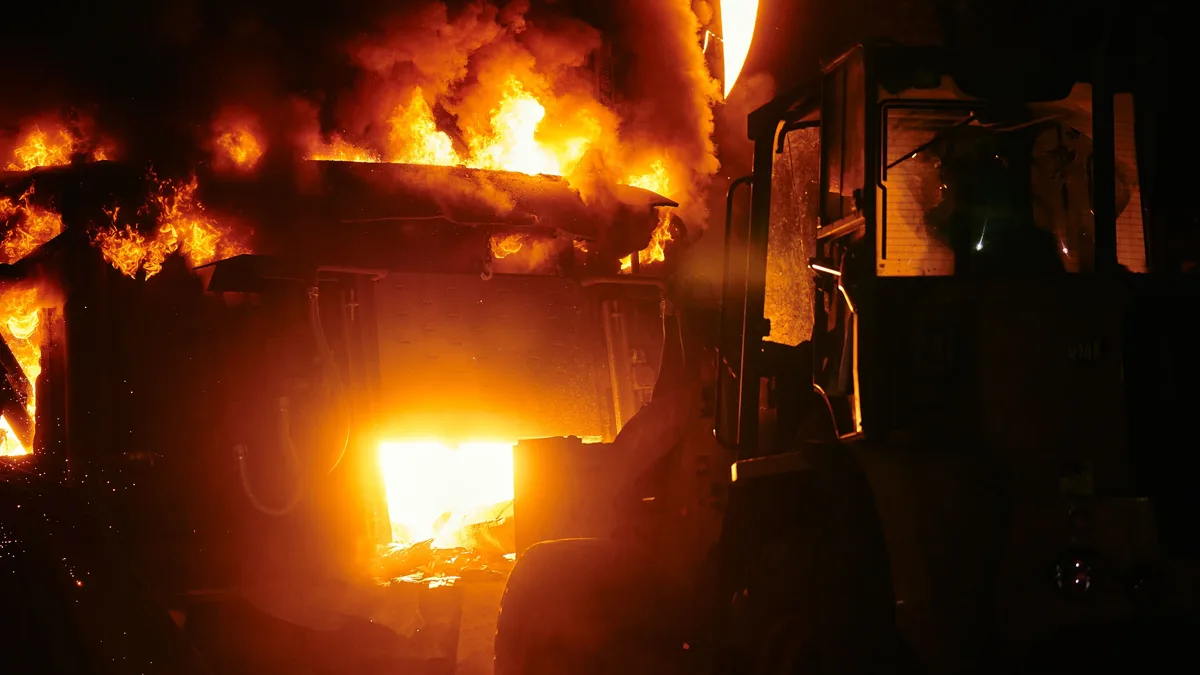
A Tesla Semi caught fire on Interstate 880 in Hayward, California, on Tuesday, October 27, 2026. The blaze began just after 5:30 p.m. local time in the southbound lanes near Route 92, with no crash or other vehicles involved. The driver escaped without injury, but the Class 8 electric truck was completely destroyed. The California Highway Patrol shut down both directions of I-880 between Winton Avenue and Route 92, citing hazardous chemical smoke from the burning lithium-ion battery pack.
Northbound lanes reopened at approximately 8:40 p.m. that same evening. Southbound lanes did not fully reopen until around 3:30 a.m. on Wednesday, October 28. This resulted in a traffic disruption lasting nearly ten hours for southbound traffic and about three hours for northbound. The CHP stated that the lithium batteries were "incredibly difficult to extinguish." The cause of the fire remains under investigation, and Tesla has not released a public statement. The truck may have been part of PepsiCo's early fleet, which operated about 86 Tesla Semis in 2024, though this is unconfirmed.
Traffic impact and response
The fire caused a significant closure on a major Northern California freight corridor. It marks the second time in about two years that a Tesla Semi fire has shut down a California interstate. A similar incident closed I-80 near Emigrant Gap for 15 hours in 2024. The lengthy shutdown this week was due to the specific hazards posed by a burning high-voltage battery. Fire response for such incidents requires large volumes of water to cool the cells and prevent reignition.
Industry context and safety protocols
The incident occurs as Tesla Semi volume production begins in Nevada after years of delays. It shows growing safety discussions around electric commercial vehicles as fleet adoption accelerates. While battery fires in these trucks are statistically rare, they present unique challenges. For context, U.S. fire departments responded to an average of 15,462 large-truck fires annually between 2018 and 2022. Mechanical failure was a factor in 44% of those fires, while only about 2% were tied to a collision. The National Fire Protection Association and Department of Transportation data indicate one vehicle fire for every 17 million miles traveled. Tesla claims one fire per 140 million miles for its own vehicles.
Fleet operators are advised to review their safety protocols in light of this event. They should pull maintenance and inspection logs, paying particular attention to battery thermal system checks. Any inspections conducted less frequently than the manufacturer recommends warrant scrutiny. Drivers must be briefed on early warning signs like battery temperature alerts, sudden loss of range, burning smells, or visible smoke.
Emergency response plans should be clear. Drivers must not attempt to fight the fire themselves. When contacting emergency services, they must immediately notify dispatch that the vehicle is an electric truck. Operators should contact Tesla Fleet Support for specific guidance until an official service bulletin is issued. Any observed anomalies, such as unusual heat, alerts, or range degradation, should be documented and reported to both Tesla and the National Highway Traffic Safety Administration.
Tesla continues to develop its battery technology with cost and safety in mind. Robert Sumpf, a Tesla engineer, recently explained the strategy for the upcoming Cybercab robotaxi: "So, we protected this pack to go to an even lower energy dense chemistry as we scale and need to bring LFP into the platform." This shift to lithium iron phosphate (LFP) chemistry, known for its stability, could influence future commercial vehicle designs. For now, fleet operators are urged to review their emergency response protocols and contact Tesla Fleet Support for direct guidance.