Tesla driver asleep with FSD engaged crashes into CHP patrol car
A 22-year-old Tesla driver told police he was asleep with Full Self-Driving engaged when he crashed into a California Highway Patrol car on October 13, injuring two officers. The incident renews scrutiny of Tesla's driver-assistance system and its ability to prevent dangerous driver inattention.
A Tesla driver crashed into a California Highway Patrol car on Interstate 80 in Fairfield just before midnight on Tuesday, October 13. The 22-year-old driver from Sacramento told investigators he was asleep behind the wheel with Tesla's 'Full Self-Driving' system engaged when his car entered closed lanes and struck an occupied Dodge Charger patrol car at highway speed.
Two CHP officers were injured in the impact. They have both been released from the hospital and are expected to recover. The Tesla driver walked away with only minor injuries. Officers had closed four lanes of eastbound I-80 west of Air Base Parkway while investigating a separate fatal crash. The closure was marked with cones, flares, and several emergency vehicles with flashing lights, with all traffic diverted to the slow lane.
Driver condition and FSD claims
The driver's claim that Full Self-Driving was active is currently the only evidence. The California Highway Patrol reported the claim but noted that Tesla's vehicle logs will determine the actual status of the system at the moment of impact. CHP has not released the specific Tesla model or software version involved in the crash.
FSD functionality and driver monitoring
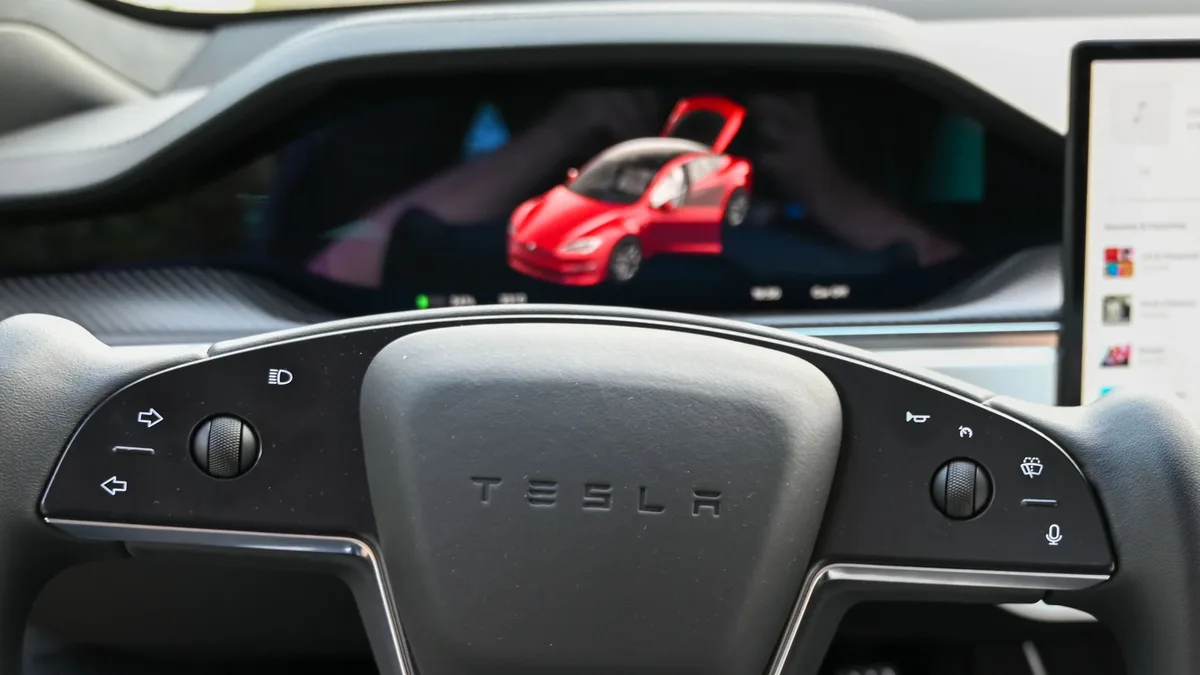
Tesla's FSD (Supervised) is designed as a driver-assistance feature. It uses an in-cabin camera to monitor driver attention and is supposed to issue warnings then disengage if the driver looks away. However, methods to bypass this monitoring are widely known. Drivers have reported successfully blocking the cabin camera with simple objects like a dollar bill.
Official statements and system classification
Full Self-Driving remains classified as an SAE Level 2 system. This means it requires the human driver to remain alert and ready to take control at all times. The CHP reinforced this point in a public statement. "Technology does not relieve drivers of their responsibility to safely operate their vehicles," the agency said.
Pattern of prior incidents and regulatory response
This crash follows a pattern of similar incidents involving Tesla's systems and emergency scenes. The National Highway Traffic Safety Administration opened an investigation in August 2021 after a series of Teslas on Autopilot crashed into stopped emergency vehicles. That probe ended with Tesla's recall of over 2 million vehicles in December 2023. The fix was an over-the-air update intended to improve driver-attention alerts.
Just months before the Fairfield crash, in June 2024, a Tesla on FSD hit a parked police car in Fullerton while officers handled a fatal crash. That driver admitted to being on his phone. Five years after NHTSA first flagged emergency scenes as a risk, a Tesla allegedly drove into another one at speed.
Commentary from industry observers highlights the dual responsibility. One noted that the driver is responsible for falling asleep and should face consequences. The same observer added that Tesla cannot wash its hands of the issue. Another pointed to a principle of design, arguing a company must make its product safe, including against easy workarounds to safeguards. They cited the complacency that grows as the system improves.
In December, Tesla CEO Elon Musk claimed FSD drivers could text and drive depending on traffic context. Texting while driving is illegal in California. The company agreed to drop the 'Full Self-Driving' name in Europe after German regulators called it misleading. Musk continues to promise a future version that will not require supervision.
Tesla’s vehicle logs will determine the actual status of FSD engagement at the time of the crash.