Mercedes-AMG GT SUV electric performance specs launch 2027
Mercedes-AMG has unveiled its first in-house developed all-electric performance SUV, the GT SUV, with up to 1,153 hp and 710 kW charging, arriving in the US in summer 2027.
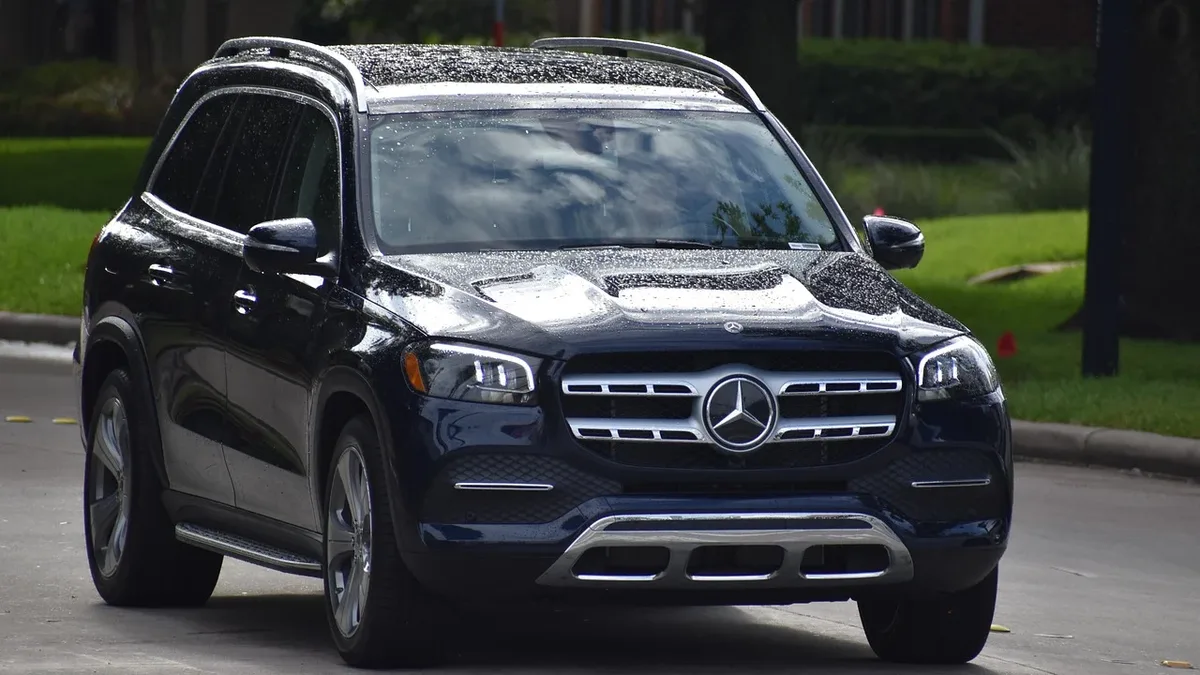
Mercedes-AMG has unveiled the GT SUV, an all-electric performance SUV with up to 1,153 hp from three axial-flux motors and DC fast charging at up to 710 kW. This marks the brand's first full-size SUV developed entirely in-house from the ground up on its dedicated AMG.EA electric architecture. It is the second vehicle on that platform and is scheduled to arrive at U.S. dealerships in the summer of 2027.
Power, torque and performance figures across the three model tiers
The launch lineup features three distinct model tiers, with outputs ranging from 536 to 1,153 horsepower. Each variant uses different motor configurations and delivers specific acceleration times.
| Model Variant | Motor Setup | Peak Power | Torque | 0-60 mph (with rollout) |
|---|---|---|---|---|
| AMG GT 63 SUV | Three axial-flux motors | 1,153 hp | 1,475 lb-ft | 2.4 seconds |
| AMG GT 55 SUV | Three axial-flux motors | 805 hp | 1,372 lb-ft | 2.7 seconds |
| AMG GT 53 SUV | Two synchronous motors | 536 hp | 590 lb-ft | 3.7 seconds |
The flagship GT 63 SUV can also sprint from 0 to 124 mph in 6.8 seconds and has an electronically limited top speed of 168 mph. Its tri-motor setup generates a sustained output of up to 711 horsepower.
Battery, charging and thermal management technology
The SUV uses 800-volt battery packs with advanced cell chemistry. Mercedes uses tall, narrow cylindrical cells with an NCMA cathode and silicon in the anode, claiming more than 298 Wh/kg at the cell level. Electrically non-conductive oil flows around each individual cell to maintain consistent operating temperatures under sustained heavy loads.
Two battery capacities are offered. The GT 63 and GT 55 get a 128 kWh usable pack, while the GT 53 uses a 106 kWh pack. Charging capabilities are tiered to match.
| Battery & Model | Max DC Charging | 10-80% Charge Time | Range added in 10 min (WLTP) |
|---|---|---|---|
| 128 kWh (GT 63/55) | 710 kW | 12 minutes | 454 km (282 miles) |
| 106 kWh (GT 53) | 600 kW | 11 minutes | 380 km (236 miles) |
The charging system natively supports 800-volt DC fast chargers while automatically converting to 400-volt operation for legacy infrastructure. The axial-flux motors, a technology from UK specialist YASA which Mercedes bought in 2021, are flat, pancake-shaped units that deliver more power for their weight than conventional radial-flux motors.
Real-world charging limits and performance context in the US market
Despite its 710 kW charging capability, usable infrastructure in the United States remains limited. The fastest public chargers widely available are rated for 400 kW. A planned 750 kW charger has slipped to next year. China already has 2,250 kW chargers in service. The GT SUV does support the NACS standard, but charging anywhere near its maximum rate will be constrained for the foreseeable future.
Range, weight, design and driver experience details
WLTP range estimates vary by model. The GT 63 and GT 55 are rated for 620 to 700 km (385 to 435 miles), while the GT 53 is rated for 597 to 668 km (371 to 415 miles). EPA numbers are expected to be lower. The GT 63 SUV weighs 2,695 kg (5,942 lb) and has a drag coefficient of 0.27.
The vehicle includes an artificial engine sound system. The GT 63 and GT 55 simulate a V8 noise, while the GT 53 uses a six-cylinder sound in its AMGFORCE Sport+ setting. Mercedes CEO Ola Källenius is a big believer in the fake V8. A 'Silent' setting is available to disable the sounds entirely.
Rear-axle steering of up to 6 degrees is standard. The GT 63 also gets AMG Active Ride Control+ as standard, swapping mechanical anti-roll bars for active hydraulics and air springs. Inside, a 14-inch central screen merges with a 10.2-inch driver display, with an optional 14-inch passenger screen. The rear axle of the GT 53 incorporates a two-speed transmission. The vehicle will be built at the historic Sindelfingen plant in Germany. The first units are scheduled to arrive at U.S. dealerships in the summer of 2027.