Winduction's tire-integrated wireless charging for electric buses
Swiss startup Winduction has developed a wireless charging system for electric buses that embeds induction coils into specially designed, steel-free tires.
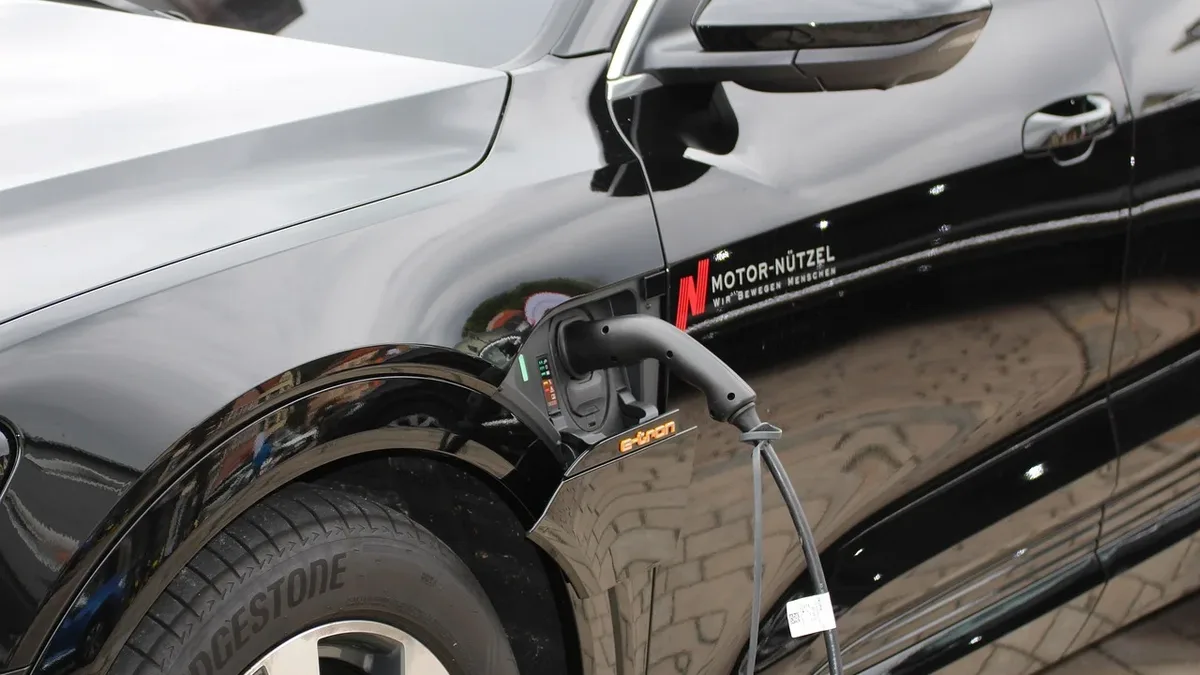
A Swiss startup has developed a cable-free charging system that embeds induction coils directly into specially designed bus tires. Winduction, a spin-off from ETH Zurich, built this wireless charging system using coils in road plates and receiver coils inside the tires to minimize the transmission distance between the road and the vehicle's chassis.
The system addresses a key weakness of traditional inductive charging: the varying distance between the road and the undercarriage. Co-founder and CTO Sylvain Fricker explained the logic. "In any vehicle, the only thing that’s always in contact with the ground are the wheels," he said. The technology uses magnetic fields to transfer power when a wheel aligns with a charging plate embedded in the road.
A major technical hurdle involves conventional bus tires, which contain steel belts that react with magnetic fields and convert energy into heat. To solve this, Winduction is collaborating with partners to develop a completely new, steel-free tire for the system.
Efficiency and cost benefits demonstrated in Zurich pilot
The system achieves more than 90% road-to-vehicle energy transfer efficiency. This high efficiency allows electric buses to use significantly smaller batteries, which reduces upfront cost and improves operational efficiency.
Winduction demonstrated the potential on the Zurich Airport to Oerlikon bus line. Operations on this specific route would require charging plates at only 2 of its 24 stops. Over a 16-hour day, buses would top up their batteries for a total of approximately 3 hours across those stops. This contrasts sharply with the current standard practice, where electric buses must charge overnight at a depot for about 5 hours.
CEO Laurin Schwitter highlighted the economic argument. "We believe that electric buses can be operated much more cheaply if they are charged wirelessly and regularly during operation," he stated. A feasibility study with transport operators is currently quantifying the precise savings compared to traditional depot charging.
Real-world testing infrastructure being built in Winterthur
To prepare for real-world deployment, Winduction is constructing dedicated testing infrastructure in Winterthur, Switzerland. This includes a test lab and a fully equipped test bus stop. The prototype system is currently at this testing stage, allowing for further refinement before public trials.
Discussions are underway with several Swiss transport operators to gauge interest and plan future collaborations. The company is also working to finalize the development of the necessary steel-free tires, which are expected to cost more individually than conventional ones. However, the additional tire cost is believed to be small compared to the overall cost savings from smaller batteries and more efficient operations.
Pilot program planned for 2028 with passenger service
The company's founders plan to conduct the first passenger-carrying pilot in 2028. This initial demonstration will take place on the Zurich Airport to Oerlikon route. The pilot will showcase the system's practicality, with just two charging points needed along the 24-stop route.
If successful, the technology could enable buses to charge incrementally in the brief time it takes for passengers to board and alight at designated stops. The first passenger-carrying pilot is scheduled for 2028 on the Zurich Airport to Oerlikon route.