Tesla Roadster 2026 specs claim sub-0.59s 0-60 and flight
Tesla has announced three trims for its next-generation Roadster, with the top Rocket version claiming a 0-60 mph time under 0.59 seconds and flight capability using cold gas thrusters.
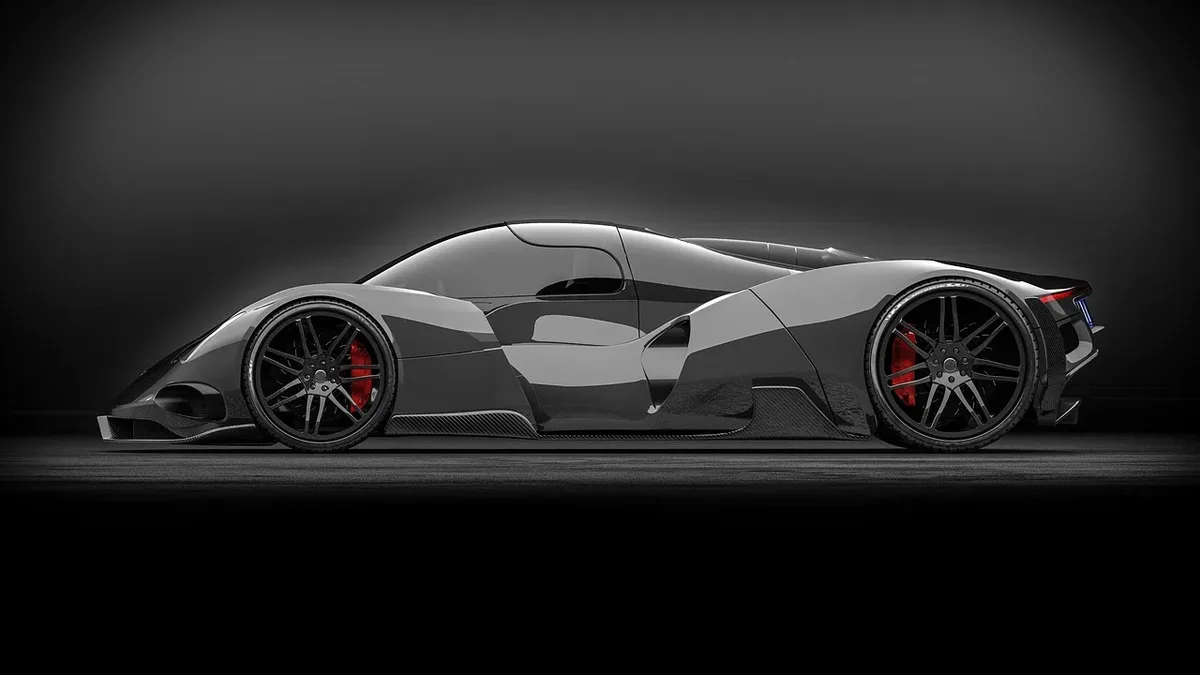
Tesla has revealed detailed specifications for its second-generation Roadster, announcing three performance trims with escalating capabilities. The company demonstrated the vehicle accelerating from 0-60 mph in under one second using rear-mounted cold gas thrusters. Tesla first showed this next-generation Roadster in November 2017, at the same event where it unveiled the Tesla Semi, and took reservations for it then. The original Tesla Roadster from 2008 started the electric vehicle sportscar segment.
The new model is offered in three configurations: a two-seat Performance car, a two-seat Thrust augment, and an invitation-only Rocket augment. Tesla's main site uses the phrase 'under 1 second' for the Thrust version's 0-60 mph time, while a configuration announcement claims sub-0.9 seconds for that trim. The useful starting point for specifications is the split between these standard, Thrust, and Rocket augments. Tesla’s product page includes restrictive footnotes stating some capabilities are Rocket-only and region-dependent. The Rocket version is explicitly marked as not approved for public road use.
Acceleration and speed demonstrations
Tesla demonstrated and claimed extraordinary acceleration figures. The company showed a recorded 0-60 mph test where the Roadster reached 60 mph in one second. Tesla later claimed a live demo achieved 0-60 in 0.81 seconds after timer issues. In a tweet, Tesla stated the top-spec Roadster would hit 0-60 in under 0.59 seconds. The 0-60 mph demonstration time shown at the October 15, 2026, unveiling event was 0.81 seconds. Tesla announced a top speed above 230 mph (approximately 370 km/h), specifically for the Rocket version.
| Trim | Seats | 0-60 mph Claim | Key Feature |
|---|---|---|---|
| Performance | 2 | Not specified | Base model |
| Thrust | 2 | Under 1 second (sub-0.9s per config) | Cold gas thruster augment |
| Rocket | 1 | Under 0.59 seconds | Flight-capable, invite-only |
Thruster and fan car technology
Tesla detailed its cold gas thruster and fan-based suction systems enabling jumps and aerial maneuvers. The company says flight is only available on the invite-only Rocket version, which is not offered in every region and is not approved for public road use. Tesla's demo included the Roadster driving upside down using a 'fan car' or 'multi-mode suction system'. This fan system uses skirts to seal the underside and create low pressure for downforce, claiming the Roadster could achieve 4,700kg of downforce. Tesla claims the Roadster can corner at 2G lateral acceleration.
The vehicle performed a jump using 'cold gas thrusters' placed around it. The rear thrusters have four ports and produce 80 kilo-Newtons of force. Tesla claims its thruster system can generate four to five times the force the tires can. It uses cold gas (stored pressure) via composite overwrapped pressure vessels (COPVs), with Tesla packing usable voids with COPVs to store gas for thrust. The Rocket trim has only one seat to accommodate larger gas tanks for flight capability. Tesla demonstrated the Roadster doing a 'kickflip' using the same thruster technology as the jump. The fan suction system can reduce pressure beneath the car even when stationary, if underbody sealing maintains pressure difference. Tesla demonstrated aerial maneuvers including an inverted ramp sequence, gas-assisted departure and recovery, and an airborne maneuver over a line of Tesla vehicles.
Elon Musk said: "the car would be able to fly, and it did. It did a flip in the air as well."
Range, aerodynamics and limitations
While range and top speed claims were made, independent verification is lacking. At the 2017 unveiling, Tesla claimed the Roadster would have a 600-mile range. The new version is expected to have a range of 'over 300 miles' (approximately 483 km). Tesla announced a range above 300 miles. The company's original battery chemistry prioritized energy density over power density. Achieving over 1,000 horsepower would require a massive battery due to the energy-power tradeoff. The reduced range may result from less power than planned or improved cell power output. Tesla may be relying on boosters and the fan car system to compensate for battery limitations.
Tesla has not provided a complete range certification or separate top-speed table for all three configurations. The limits, test methods, and repeatability behind the performance numbers are not fully disclosed. No independent timing certificate exists for the 0.81-second or 0.59-second claims. Tesla’s aerodynamics announcement makes an ambitious passive-downforce claim approaching Formula 1 levels. The Roadster has an adjustable rear wing for active aerodynamics, with Tesla identifying Optimus-related wing actuators in its aerodynamics announcement. Elon Musk called it 'the best of the last of the human-driven cars' and said Tesla and SpaceX engineers worked on it together.
Final purchase prices for the Roadster remain unannounced. Tesla is currently collecting reservation payments for the Roadster while final specifications and pricing remain unannounced.